
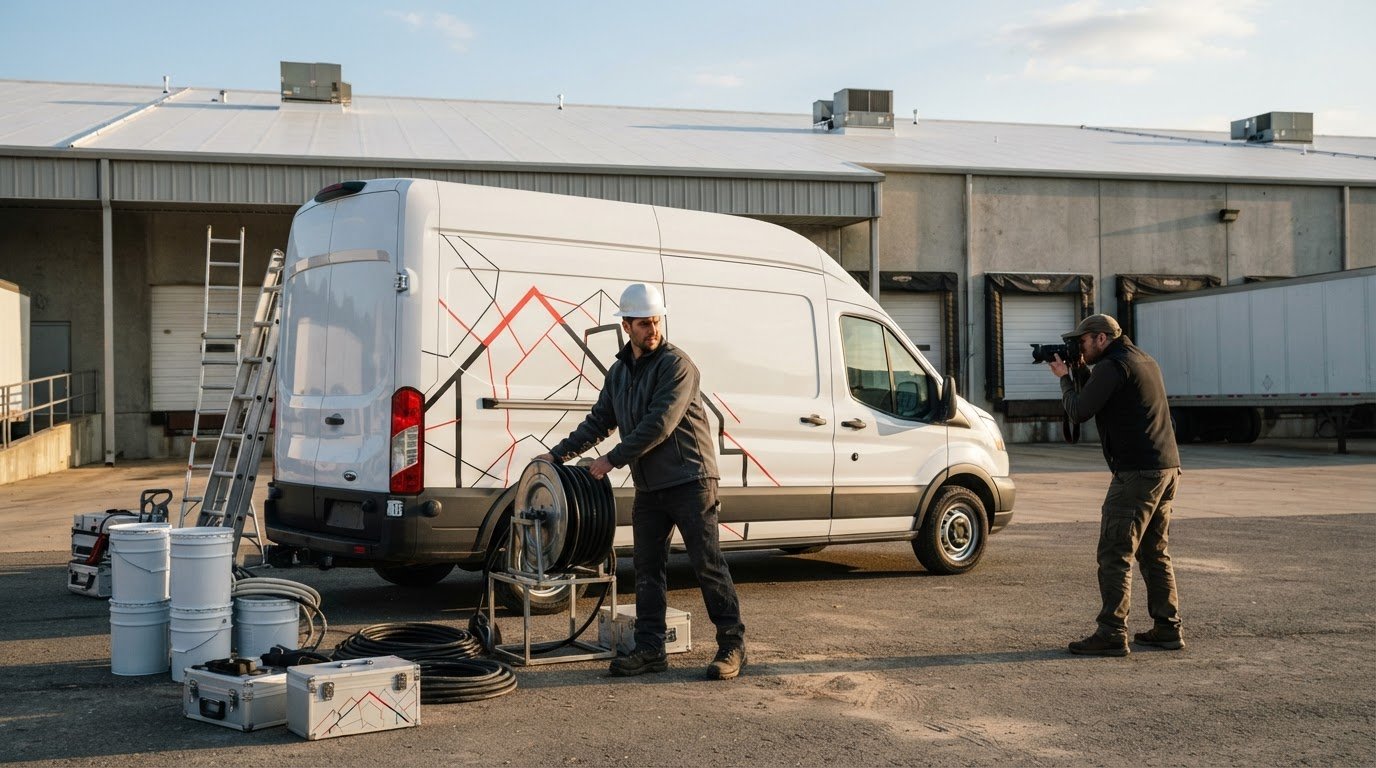

Article by
Harry Stanley III
Harry Stanley III is a construction marketing strategist and fractional CMO at H&A Marketing. He has helped construction companies grow through website strategy, SEO, paid advertising, branding, lead generation, CRM systems, and professional content. His past work includes helping Meraki Solar generate an additional $3.7 million in revenue in his first year and supporting American Builders as a fractional CMO. Today, Harry works directly with custom home builders and construction companies to build marketing systems designed to generate qualified leads and measurable growth.
A logo alone won’t set a commercial roofing contractor apart. Memorable commercial roofing branding connects a clear point of difference with a consistent voice, visual identity, and message across your website, proposals, trucks, and social channels. Facility managers and property owners should recognize the same business wherever they encounter it.
Consistency matters, but branding is about more than looking polished. Your message also needs to reflect the work you want to win, whether that’s commercial roof restorations, replacements, or coatings. A brand built around the right projects helps prospects understand what you do and why your company fits.
This article explains how to define your positioning, choose brand visuals, and develop a voice that sounds like your business. You’ll also learn how to carry those choices across marketing channels so every touchpoint supports the same identity and builds trust with commercial buyers.
Key Takeaways
- Define what sets your commercial roofing company apart, then make that difference clear to facility managers and property owners.
- Choose a distinct brand voice and visual style that reflect the projects you want to win, from restorations to replacements.
- Use customer feedback to guide a rebrand and make your identity recognizable across your website, proposals, trucks, and social media.
- Keep messaging and visuals consistent so every marketing touchpoint reinforces the same professional impression.
- Connect your brand with a coordinated marketing approach to help attract qualified commercial roofing opportunities.
What Are Some Roofing Company Branding Tips?
Build your commercial roofing brand around the projects you want to win, then carry that focus through your website, advertising, and social channels. A facility manager reviewing a restoration proposal should see the same specialty whether they arrived through a search result, project page, or company post. Consistency makes your business recognizable and gives each marketing touchpoint a clear purpose.
Start by defining your target customers, priority projects, and distinctive approach. For example, a contractor pursuing commercial replacements might emphasize coordinating work around active facilities. Before choosing a business name, research domain availability and make sure the name stands apart in your market. Consider how it looks on a proposal cover, appears in search results, and sounds when a salesperson introduces the company.
Use your website to connect that position with useful information. Describe restorations, replacements, and coatings clearly, and pair each service with relevant project examples. Keep the logo, typography, and color palette consistent across service pages and advertising. When prospects move from an ad to a project page, they should recognize the same company and understand how the example relates to the service.
Digital and physical advertising serve different purposes. A search ad can reach someone actively researching a roof project, while a wrapped truck can build visibility near a commercial property or jobsite. Choose a format based on where buyers encounter contractors and what information they need next. A vehicle can display your company name and core service, while a digital ad can direct prospects to a relevant service page.
Rooftop logos are a specialized physical branding option for buildings where overhead visibility matters. Consider the site, intended audience, and whether a rooftop mark suits the property before treating it as advertising. It serves a different role from a proposal, service page, or direct outreach to property owners, so use it to support those channels rather than replace them.
Roofing tile advertising should accurately represent the product or work being promoted. Pair a tile sample with a project photo and explain the building application. Keep this content separate from pages about commercial membrane restorations or replacements, so buyers can tell which roofing systems your company installs. On social media, share project progress, explain the work shown, and respond to relevant questions.
Keep advertising claims accurate and supported by your company’s records. Describe completed work, materials, and service capabilities plainly; avoid guarantees or performance promises you cannot substantiate. To create a brand strategy, define the target buyer, priority projects, differentiator, message, and visual direction, then apply those choices across channels. A focused construction branding approach can help align those elements.
Brand voice, tone, imagery, and positioning
Your voice and visual choices should reflect the commercial roofing work you want to be known for. A contractor pursuing facility-manager projects needs a different emphasis from a company focused on small residential repairs.
Brand Voice and Slogans
Brand voice is how your company speaks consistently; a slogan distills that voice into a short, memorable line. For a commercial roofing contractor, plain language about restoration planning or replacement expertise can sound more credible than a broad promise to be “the best.” Use wording your sales team can support in proposals, calls, and project updates.
Shape your voice around real customer priorities. A property manager may care about clear scheduling, access coordination, and documentation; a building owner may want a direct explanation of restoration versus replacement. A slogan should reinforce your position, not introduce a claim your team can’t demonstrate. Keep the tone consistent in bid responses and social posts.
Brand Voice and Fonts
Fonts don’t speak literally, but their shapes and spacing influence how a message feels. A clean, legible typeface can support a direct, professional voice on a proposal cover, while decorative lettering may distract from technical project details. Choose typography that makes headings, captions, and body text easy to scan on screens and in print.
Test design elements in real-world settings. Place a heading over a project photo, then review it on a phone and in a printed proposal. Check whether the company name stays readable on a truck door and whether smaller text disappears. A consistent font hierarchy helps you present scope, schedule, and next steps clearly.
Imagery and Brand Positioning
Imagery provides visual evidence of your position: it shows the buildings, crews, and roofing work associated with your company. A contractor specializing in commercial restorations should feature relevant roof conditions and completed projects rather than generic house-roof images. Choose photos that help facility managers recognize the types of properties and work you serve.
Make sure each image supports the claim beside it. If a page discusses roof coating installation, show that type of commercial project, not an unrelated tile roof. Include manufacturer logos or product references only when they accurately represent the work shown. This alignment helps prospects connect your stated specialty with visible examples.
Positioning also guides which projects receive the most attention. If occupied buildings are a priority, show how your team presents access planning and communication in project materials. If replacements are central, make replacement examples prominent. A focused construction branding approach can help align these voice and visual decisions.
Roofing company rebranding and visual identity
A strong commercial roofing brand makes your specialty recognizable and your differences easy to understand. Rebranding works best when the visual identity reflects the projects, customers, and service standards your company wants to represent.
Identity and Brand Differentiation
Brand identity combines the visual and verbal elements that distinguish a roofing company in its market. It helps facility managers quickly understand whether your company handles the work they’re considering.
For example, a contractor focused on commercial restorations can make that expertise visible through its name presentation, project materials, and logo system. Customer reviews can also reveal meaningful differences. Ask past customers what they valued, what frustrated them, and why they chose your company. Use their answers to shape a position grounded in real experience, not generic corporate claims.
Brand Identity and Trust
A roofing brand builds trust when its visual presentation matches the customer experience. A proposal, jobsite sign, and project update should clearly come from the same company, using consistent names, colors, and logo elements.
Imagine a facility manager who sees a proposal from “Northline Roofing,” then receives a project email signed “Northline Commercial Services.” Even if both names belong to one business, the mismatch can create uncertainty. A rebrand should clarify how the company identifies itself across customer-facing materials. Make the new identity legible and consistent, and explain any name change directly to existing customers.
Roofing and Guttering Identity
Roofing and guttering can share one identity when they serve the same commercial customers and fit a clear service promise. A company offering roof replacement and drainage work might use a broad roofing identity, then describe each service separately in its materials.
If the two service lines target different buyers or require distinct expertise, separate labels can improve clarity without creating unrelated brands. For example, keep the main company name prominent while giving commercial gutter systems a clear section in proposals and online materials. Maintain an obvious visual connection so customers know which business stands behind both scopes.
Qualities of a Strong Commercial Roofing Brand
A strong brand is distinctive, relevant to its target buyer, and easy to apply across practical materials. The mark should remain recognizable on a proposal cover, uniform, truck door, and digital profile, while the company name stays readable at every size.
Before changing identity elements, review your market, customer feedback, and planned work. Check that a proposed name stands apart in your market and isn’t already trademarked. Then plan the transition across proposals, signage, uniforms, and customer communications. Updating materials in a coordinated way helps prevent old and new identities from competing during a rebrand.
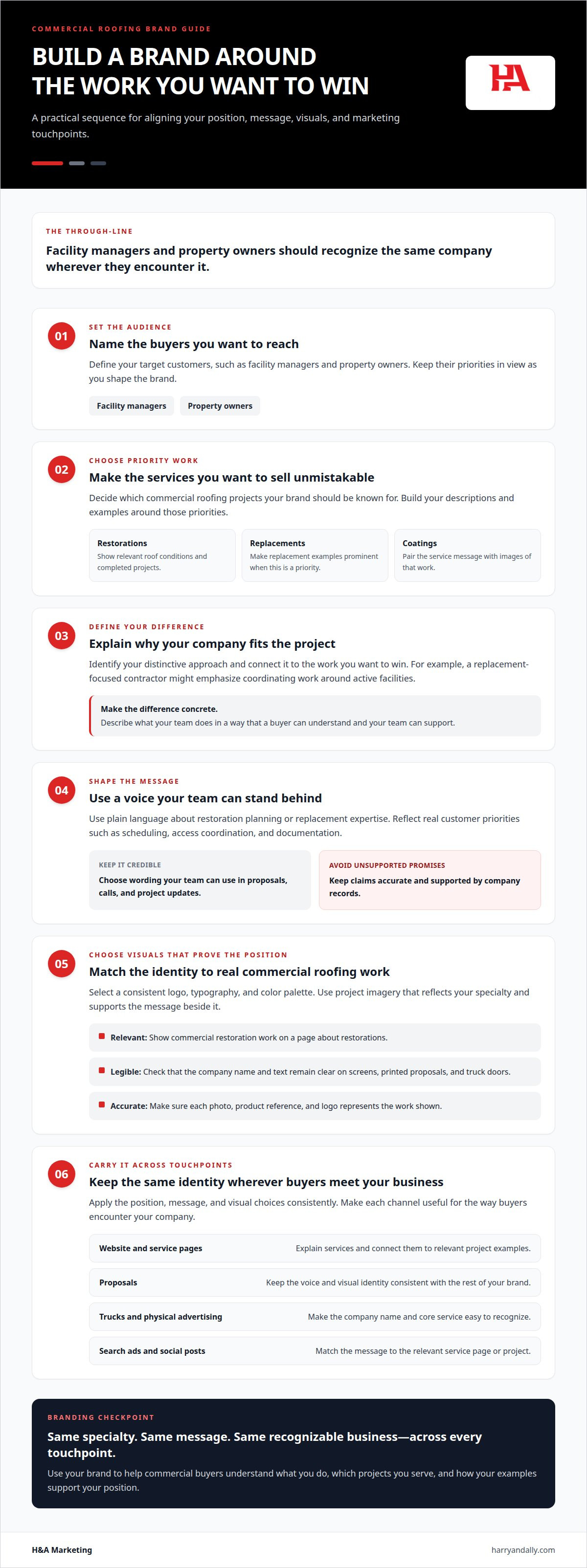
Branding benefits for roofing companies
A clear brand helps commercial roofing buyers connect your company with the work it performs. For example, a property owner comparing roof replacement proposals should be able to identify which contractor specializes in that project type. Specific service language and a consistent identity make your company easier to recognize during evaluation, especially when several proposals arrive close together.
A focused reputation can attract better-fit leads. When your marketing accurately describes commercial restorations, replacements, and coatings, prospects can match their building needs to your services before getting in touch. A facility manager seeking restoration can then ask relevant questions about their roof instead of submitting a general inquiry that doesn’t fit your project focus.
Branding can also give sales conversations useful context from the start. A service page explaining how your company approaches occupied facilities gives prospects something concrete to discuss. Your team can spend less time correcting assumptions and more time understanding the building, decision process, and project requirements. Clear expectations make early conversations more productive.
Consistent materials can help buyers follow a long sales cycle. A prospect might encounter a project profile, a proposal, and a follow-up email weeks apart. If each clearly identifies your company and its commercial roofing focus, the buyer can connect those interactions. That continuity helps your sales team maintain recognition as decision-makers review scope, timing, and internal approvals.
Branding also gives project documentation a practical role. A project sheet can organize the building type, completed work, and relevant photos under a recognizable identity. A proposal can use the same visual system to help decision-makers locate scope details and next steps. These tools help your team explain complex roofing work without expecting a logo to communicate your expertise on its own.
Accurate digital profiles help prospects confirm they’ve found the right business. If your company name, service descriptions, and contact details differ between the website and social accounts, a property manager may hesitate before getting in touch. Keep core information consistent across profiles and make commercial roofing services easy to identify. This reduces confusion during early research.
Measure branding against business priorities, not appearance alone. Review whether inquiries involve your target project types, whether prospects understand your specialty, and which materials help move discussions forward. For example, if inquiries repeatedly concern services outside your focus, adjust the wording or page paths that attract them. These observations can refine your marketing toward better-fit opportunities and a more useful sales pipeline.
Consistency across marketing channels
A consistent marketing strategy connects each prospect interaction, from online search to proposal review. For a commercial roofing contractor, your website, search ads, social profiles, email, and sales materials should identify the same core work and audience.
Start by recording a few decisions in a short brand reference: approved company name, service descriptions, logo files, voice, and contact details. Assign someone to maintain it. For example, if your website calls a service “roof restoration,” avoid describing the same work as “roof repair” in ads unless the scope genuinely differs. Clear language helps prospects understand what your team offers.
Next, give each channel a distinct role. A service page can explain restoration and replacement options; a Google ad can focus on the specific service being searched; a LinkedIn post can show a completed facility project. The content can change, but your central promise and identity should stay recognizable. This makes the path from discovery to sales conversation easier to follow.
Consistency means adapting the format without changing the facts. A proposal may include detailed scope language, while a social caption needs a concise project summary. Both should describe the same building type, work performed, and company role. If a job involved a roof coating, don’t call it a full replacement in another channel to make the post sound stronger.
Review customer-facing materials as a set. Compare a current ad, service page, proposal, email signature, and social profile. Look for differences in the business name, service claims, contact details, and tone. The U.S. Environmental Protection Agency notes that inaccurate, inconsistent, or inaccessible communications can undermine an organization’s credibility and brand reputation.
Include accessibility in your review. Check that service pages use descriptive headings, links explain where they lead, and important information doesn’t rely on color alone. For example, label project stages with words in a proposal rather than using only colored boxes. Clear formats help facility managers scan details and share them with other decision-makers.
Keep audiences distinct when needed. If your company serves commercial buyers and homeowners, separate the messaging and landing pages. A facility manager evaluating a large replacement needs different project details from a homeowner seeking residential work. Clear paths prevent unrelated inquiries and keep your commercial positioning focused.
Set a recurring review around actual marketing activity. Compare campaign language with the calls and inquiries it generates, then correct mismatches such as ads promising coatings when the linked page discusses replacements. Strong coordination helps your digital presence, advertising, and sales process support one another. For a connected commercial roofing marketing strategy, align the message from first click through follow-up.
Discuss your commercial roofing marketing strategy
H&A Marketing: Logo Design & Branding
H&A Marketing helps commercial roofing contractors build a clear brand identity through Logo Design & Branding. Turn your specialty, ideal projects, and customer priorities into visual elements and messaging that fit your business. If your current identity feels inconsistent or no longer reflects your work, a focused rebrand can create a stronger foundation for proposals and marketing.
That identity can carry through Website Design, Search Engine Optimization, and Lead Generation. A consistent website helps facility managers connect your brand with commercial roof restorations and replacements, while SEO and lead generation support visibility and inquiries from relevant prospects. The right starting point depends on whether you need to clarify your positioning, refresh your visuals, or connect brand decisions with business development.
Contact H&A Marketing to discuss the next step for your commercial roofing brand.
Make Your Brand the Next Step in Growth
Choose one practical next move: define the commercial roofing projects you want to attract, then make sure your brand speaks directly to those buyers. A clear commercial roofing branding strategy can make your identity more recognizable and give facility managers a stronger reason to remember your company during a long decision process.
H&A Marketing can connect Logo Design & Branding with Website Design and Search Engine Optimization, so your identity and online presence support the same business direction. This is a useful next step if your visuals feel disconnected, your website doesn’t reflect your commercial work, or the right prospects struggle to understand your specialty.
Bring your priorities, target projects, and current marketing materials to the conversation. Together, you can identify where your brand needs more clarity and what to address first. A focused plan can help your company move forward with confidence.
Contact H&A Marketing to discuss your brand
Your next stage of growth starts with a brand that reflects the work you want to win.
Frequently Asked Questions
What Branding Elements Should Roofers Know?
Manage every part of your brand that customers encounter before, during, and after a project. Beyond a logo and color palette, consider proposal templates, email signatures, jobsite signs, uniforms, and how your team introduces the company. For example, a property manager receiving a proposal and later a project update should recognize the same business name and contact details. Treat these touchpoints as one coordinated identity, not separate design tasks.
What should a commercial roofing company logo and visual identity include?
A commercial roofing identity needs a recognizable logo, a considered color system, and typography that stays readable in real working conditions. Check how the mark looks in one color, on a dark background, and at small sizes in an email signature. A complex roof illustration may lose detail on a proposal footer. Keep essential logo versions and usage guidance together so staff and print vendors apply the identity correctly.
How to choose a name and tagline for a commercial roofing business?
Choose a name customers can say, spell, and connect with commercial roofing work. Avoid wording so narrow that it becomes awkward if your project mix expands from replacements into restorations. A tagline should clarify your focus or approach, not rely on sweeping promises. For example, language about commercial roof systems is more useful than an unsupported claim to be the top contractor in your market.
How to build trust and credibility in commercial roofing marketing?
Build credibility by showing how your company works, not relying on polished claims alone. A project profile can identify the building type, roofing challenge, and completed scope, while respecting customer permissions. Make the next step clear, too: explain what information helps prepare for an initial project conversation, such as building location, roof concerns, and timing. Specific, transparent details give buyers a stronger basis for evaluating your company.
Which branding channels work best for commercial roofing companies?
The best channel mix depends on how your target buyers research and select contractors. A service website can explain capabilities; search visibility can help buyers find those services; LinkedIn can support professional relationships; and email can keep a proposal conversation moving. Choose channels your team can maintain with relevant commercial project information. A rarely updated profile can create a different impression from a focused, current presence.
How to differentiate a commercial roofing company from local competitors?
Differentiate your company by defining the project conditions where your experience is most relevant. For example, specify whether you focus on occupied facilities, multi-building portfolios, restoration planning, or replacement work. Support that position with matching project examples and clear explanations of your process. Avoid generic claims shared by every contractor. A precise specialty helps property owners understand which inquiries fit your team’s capabilities.
How to rebrand a commercial roofing company without losing existing customers?
Protect customer recognition by communicating a brand change before replacing familiar materials. Tell current customers what is changing, what remains the same, and when they will see the new identity. Keep familiar contact details and project references easy to find during the transition. Update proposals, email signatures, signage, and social profiles in a coordinated sequence, and make sure account managers can explain the change in everyday customer conversations.
