

Article by
Harry Stanley III
Harry Stanley III is a construction marketing strategist and fractional CMO at H&A Marketing. He has helped construction companies grow through website strategy, SEO, paid advertising, branding, lead generation, CRM systems, and professional content. His past work includes helping Meraki Solar generate an additional $3.7 million in revenue in his first year and supporting American Builders as a fractional CMO. Today, Harry works directly with custom home builders and construction companies to build marketing systems designed to generate qualified leads and measurable growth.
A Google Business Profile can support local visibility, but it shouldn’t carry your commercial roofing marketing on its own. A dedicated commercial roofing section on your website gives property owners and managers a clear place to assess your restoration and replacement work, while your profile helps prospects find and contact you.
Commercial and residential roofing call for different marketing approaches. Commercial projects often involve longer sales cycles, more stakeholders, and planned budgets. Buyers need clear evidence of your expertise and a straightforward way to start a conversation, not just a quick emergency-service pitch.
This guide explains how to choose the right website and Google Business Profile setup, build trust with relevant project content, and turn visits into qualified inquiries. You’ll also learn how SEO, advertising, lead follow-up, and focused outreach can work together to reach property management companies and keep your bid pipeline moving.
Key Takeaways
- Give commercial roofing buyers a focused place to evaluate restoration and replacement work, while keeping your local business profile accurate and useful.
- Use practical educational content and project evidence to demonstrate expertise and earn trust with property owners and facility managers.
- Make it easy for qualified prospects to understand your services and contact you from a mobile device.
- Plan outreach around specific property management companies and the buildings they oversee, rather than relying only on broad advertising.
- Align your marketing with commercial roofing’s longer buying process, so your brand stays visible while prospects plan future projects.
1. Do I need a separate website or Google Business Profile for commercial roofing?
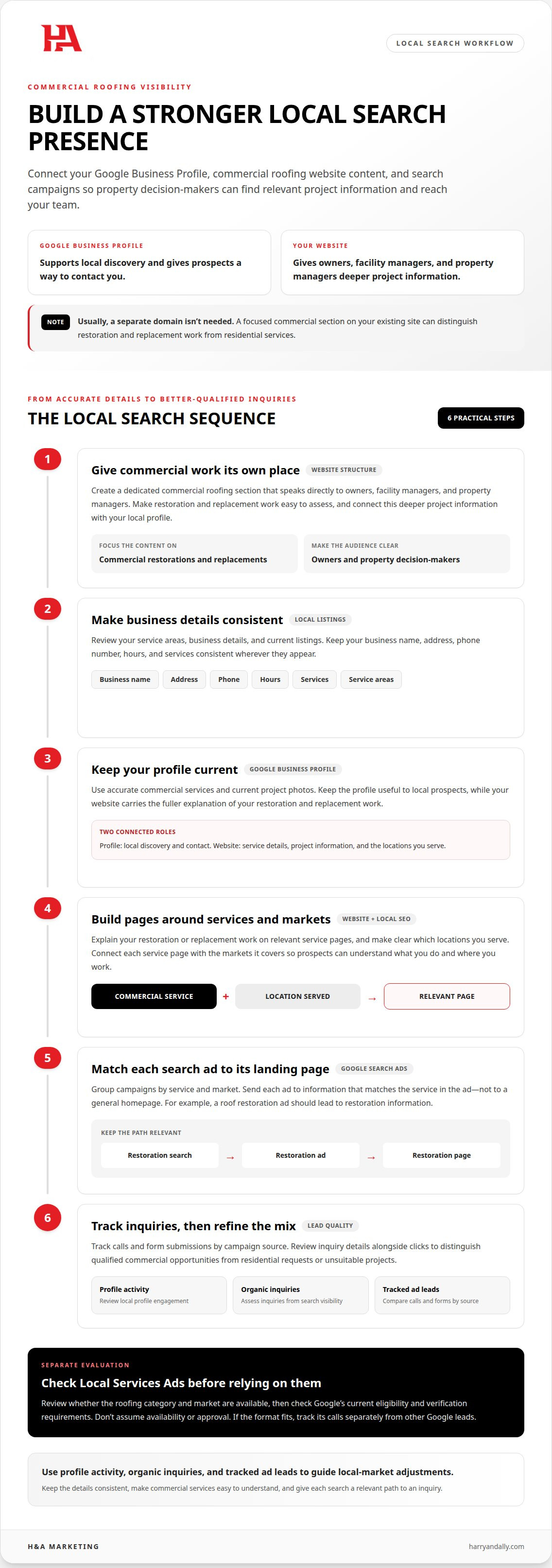
Usually, you don’t need a separate domain for commercial roofing. A dedicated commercial section on your existing website can distinguish restorations and replacements from residential services. It should speak directly to owners, facility managers, and property managers. A Google Business Profile supports local discovery, while your website gives prospects deeper project information. For a focused commercial roofing marketing approach, connect those channels rather than treating them as competing choices.
Start local optimization by reviewing your service areas, business details, and current listings. Keep your roofing business name, address, phone number, hours, and services consistent wherever they appear. Update your Google Business Profile with accurate commercial services and current project photos. On your website, create pages that explain your restoration or replacement work and the locations you serve. Consistent, specific details help search engines and potential clients understand what you do and where you work.
Which digital marketing channels generate the most commercial roofing leads? Google Search reaches owners actively seeking roof restoration or replacement through organic results and paid ads. A complete profile helps local prospects find your business, while targeted outreach and referral relationships can connect you with property decision-makers earlier. The best channel mix depends on buyer intent, service area, project focus, and how reliably inquiries receive follow-up.
For Google Search Ads, group campaigns by service and market, then match each ad to a relevant landing page. A roof restoration ad, for example, should lead to restoration information rather than a general homepage. Track calls and form submissions by campaign source. Review inquiry details alongside clicks to distinguish qualified commercial opportunities from residential requests or unsuitable projects.
Local Services Ads and Google Guarantee eligibility require a separate evaluation. Check whether the relevant roofing category and market are available, then review Google’s current eligibility and verification requirements. Don’t assume availability or approval. If the format fits, track its calls separately from other Google leads so your pipeline shows where inquiries originated.
How can you improve local SEO and Google Business Profile visibility for commercial roofers? Keep profile details accurate, create location-specific website content, and connect each service page with the markets it serves. Review search terms and incoming leads, then refine pages and campaigns around relevant restoration and replacement inquiries.
What works best in a particular local market? Match your message to local building owners’ needs, the services you offer, and the areas your crews can serve. Compare profile activity, organic inquiries, and tracked ad leads to guide adjustments. Consistent details across local listings and a commercial-focused website give prospects a clear route from search to inquiry.
2. Educational content and thought leadership
Commercial buyers need useful information before requesting a roof proposal. A facility manager comparing restoration with replacement may want to understand roof condition, project disruption, and planning considerations first. Educational content can answer those questions before a sales conversation and give your team a consistent way to explain complex work across search, social media, email, and sales follow-up.
Start with the questions your estimators hear during inspections and bid calls. Turn recurring questions into focused articles, such as how contractors assess whether a commercial roof may be suitable for restoration. Use plain language, explain the decision factors, and clarify how an inspection informs the recommendation. For search visibility, combine service, audience, and location in your target phrases, such as “commercial roof restoration” alongside the area you serve. Specific searches can signal clearer intent than broad roofing terms.
What keywords should commercial roofing companies target? Focus on terms related to commercial roof restoration, replacement, coatings, and the locations you serve. Add buyer-specific language, such as facility manager or commercial property owner, when it fits the page. Build each article around one topic, then direct readers to the relevant service information or inquiry path.
Social media works best when each post gives the target audience a reason to engage. Share a concise explanation of a roofing detail, a project milestone, or a common planning question. A post about evaluating an aging roof, for example, can direct property managers to a more detailed article. Answer relevant comments clearly, then use recurring questions to shape future content. A regular publishing rhythm helps your team stay visible on selected channels.
Project galleries and video make technical work easier to understand. Pair a completed restoration with a concise caption describing the building type, project scope, and challenge addressed. A short video can show the roof surface, explain the work sequence, or introduce the people responsible. Keep descriptions factual and confirm project details with the team involved. Strong visuals add context, but shouldn’t suggest results or specifications the project doesn’t support.
Connect content across formats instead of creating isolated posts. A blog article can inform a short social post, while an email can share the article with property contacts who already know your business. An SEO content strategy should map each topic to a buyer question and a relevant page, then review which content brings qualified inquiries. For practical examples of project photography and video, explore how visual storytelling can support commercial roofing content.
3. Roofing website conversion and mobile usability
A commercial roofing website should help property owners take the next step without making them hunt for basic details. Review every service page, landing page, and contact path from a buyer’s perspective. If someone searching for roof replacement lands on a page about residential repairs, the message misses the commercial opportunity. Clear service labels keep inquiries aligned with the work you want to bid.
Mobile usability matters because an owner or facility manager may review your site from a phone between meetings or during a property visit. Make sure text is readable, menus work, and phone numbers are easy to tap. Test forms on smaller screens, too. Asking only for a name, company, email, phone number, and project need can make it easier to start a conversation.
Give each service page a clear path to conversion. A commercial restoration page, for example, can explain the work, show relevant project evidence, and offer a concise inquiry form. A replacement page should speak to owners planning larger projects rather than focus on emergency residential repairs. Direct ad traffic and organic search visitors to the page that best matches their needs.
Local SEO supports these conversion paths by matching website content to the services and locations a roofing contractor actually serves. Check page titles, headings, internal links, and contact details for consistency. Use relevant keywords naturally, such as commercial roof replacement paired with a service location. Make each page specific enough to reach the right prospect without turning it into a list of repeated search terms.
Online reviews can build buyer confidence when they describe genuine client experiences. Make review requests part of your project closeout process and monitor feedback across relevant platforms. Keep responses professional and specific. In reply to a property manager’s comment, for example, acknowledge the concern and invite direct follow-up without sharing private job details publicly.
Website development involves more than a visual refresh. It should connect site structure, mobile layout, service content, contact forms, and tracking. Check that inquiries reach the right team and that calls and forms can be measured. This helps you assess which pages and advertising campaigns bring relevant commercial opportunities.
For a commercial roofing contractor, the website should present the company as a capable partner for property owners, not just a general roofing business. Thoughtful website design for construction companies can organize commercial services around buyer needs, clarify the next step, and support a more useful sales conversation.
4. Account-based outreach to property management companies
Account-based outreach starts with a defined list of property management firms, not a broad message sent to every business. Identify target companies, their property types, and the commercial roofing services that fit. A firm may oversee many buildings, creating several relevant opportunities through one relationship. Since a property manager’s project could involve a substantial investment, outreach should reflect the scale of the decision.
Organize prospects by account and stage. One group may manage industrial properties, while another focuses on office buildings or retail sites. Tailor each message to the property portfolio and recipient’s role. A note to a facilities contact, for example, can focus on roof-condition planning, while an owner-facing message can explain restoration and replacement capabilities.
LinkedIn can help contractors identify property management professionals and build useful business connections. Share relevant project examples, practical roof-planning information, and company updates. The goal is to stay visible and invite conversation, not repeatedly send the same sales pitch. Base follow-up on the prospect’s response and recorded history so each interaction has context.
Partnerships can broaden your network. Realtors and property managers may encounter roofing needs during property sales, leasing, or building upkeep. Build referral relationships by sharing relevant contacts and offering roof inspections for listings. Clear partnership messaging and a way to track introductions, property details, and follow-up conversations can support these efforts.
Reputation also shapes outreach. A property manager may review a contractor’s public feedback before responding to a direct message or referral. Invite satisfied clients to leave honest reviews and respond professionally to positive and negative comments. A specific, respectful reply shows you take feedback seriously. Avoid disclosing private project information or arguing about the reviewer’s experience.
Keep campaigns accountable by recording each account, contact, interaction, and next follow-up in a consistent tracking process. This helps your team distinguish a new inquiry from an existing relationship and prevents a promising introduction from getting lost. Measure qualified conversations, property opportunities, site assessments, and requests to bid, not social engagement alone.
Social media can reinforce account outreach when its content supports the same commercial message. A project update or practical post gives a property contact a reason to remember your company between conversations. Coordinated social media marketing keeps messages consistent across selected platforms, while direct outreach stays personal and relevant.
5. Differences between residential and commercial roofing marketing
Residential roofing often addresses a homeowner’s immediate problem. Commercial roofing speaks to property owners, facility managers, and other decision-makers planning work across a building portfolio. That difference changes the message, sales path, and timing. A campaign focused on urgent leak repairs won’t necessarily reach a manager planning a replacement for a future budget cycle.
Commercial replacements may be budgeted well before a property manager contacts a roofing contractor. Sales cycles can extend over months, and replacement projects are often part of a multi-year capital plan. Marketing should stay useful throughout that period. Clear explanations of restoration, replacement, and roof coating can help managers understand their options before requesting an estimate.
Residential prospects may want a quick answer about an urgent issue. Commercial buyers often need information they can share with colleagues or building owners. A project page can present the building context, work performed, and relevant photos. An inspection-focused article can explain what information supports a practical recommendation. Each piece should help decision-makers discuss the roof internally, not just push for an immediate call.
Lead qualification differs, too. A residential inquiry may concern one home and one decision-maker. A commercial inquiry could involve multiple properties, stakeholders, and a planned bid process. Campaigns should capture property type, location, service need, and timing. These details help the sales team decide whether to schedule an inspection, prepare an estimate, or maintain contact for a later project.
What marketing regulations apply to roofing companies in the United States? Requirements depend on the state, advertising channel, and claims made in a campaign. Keep estimates, project photos, reviews, and service claims accurate. For questions about specific markets or advertising practices, seek qualified legal guidance.
Common mistakes include using residential emergency messaging for commercial buyers, showing project photos without context, and treating every inquiry as equally qualified. Follow-up can also fall away after the first conversation, even though a commercial decision may take months. Track the property, contact, project stage, and next follow-up to keep opportunities visible as budgets and approvals develop.
The takeaway is simple: commercial roofing marketing should reflect commercial buying behavior. Build messaging around property needs, planning timelines, and evidence relevant to restoration or replacement decisions. This gives owners and managers clearer answers at each stage, from early research through inspection and bid evaluation.
Plan a marketing strategy for your commercial roofing business
H&A Marketing
H&A Marketing helps commercial roofing contractors connect their online presence with the buyers they want to reach. If your website, messaging, and lead flow feel disconnected, a coordinated strategy can bring them into focus. Website design, branding, SEO, and lead generation can work together to present restoration and replacement services clearly, attract relevant prospects, and support your bid pipeline.
Turn to H&A Marketing when you’re ready to make your marketing more consistent and better aligned with commercial buyers. The right starting point depends on your website, visibility, and lead needs. Contact H&A Marketing to discuss a practical direction for your business.
Build a Stronger Bid Pipeline
Connect your marketing priorities to the commercial projects you want to pursue. A clear focus on restoration, replacement, or another service area helps shape the messages, content, and lead paths buyers encounter. Consistent commercial roofing marketing gives your team a practical foundation for reaching the right prospects and supporting sales conversations.
H&A Marketing can align website design, logo design and branding, and SEO with your business goals. This coordination helps present a clear commercial roofing identity and build visibility with relevant buyers. A sound strategy starts by understanding where your current approach works and where prospects lose momentum.
Bring your priorities and current challenges to a focused strategy conversation. A practical plan can give your team clearer direction for its next stage of growth.
A more focused plan can help create your next qualified commercial opportunity.
Frequently Asked Questions
How is selling to commercial clients different from the residential sales process?
Commercial sales usually involve more stakeholders and internal review than a homeowner purchase. A property owner may consult facilities staff, asset managers, or procurement before approving a contractor. Marketing should give each person useful information to share, such as project scope, relevant experience, and a clear explanation of next steps. Residential marketing often addresses one household’s immediate concern, while commercial outreach supports an organizational decision.
What marketing strategies work best for commercial roofing companies?
The strongest strategy connects a clear commercial message with channels that reach the right buyers. Build service pages for restoration and replacement, publish useful content that answers property-related questions, and keep branding consistent across advertising and social platforms. Then track inquiries through the sales process. If a campaign attracts contacts but few suitable bid opportunities, adjust its audience, message, or landing page rather than simply increasing activity.
How can a marketing professional use paid search and social media ads to generate commercial roofing leads?
Organize paid search around commercial services and direct each ad to a matching page. Social ads can introduce project examples or useful roofing insights to relevant business audiences. Track calls and forms by campaign, then record whether each inquiry fits your company’s work. Distinguish a request from a commercial property contact from a residential repair inquiry before assessing results.
What should a commercial roofing company website include to convert visitors?
A useful site makes your commercial capabilities easy to understand and act on. Include separate information for services such as restoration and replacement, relevant project examples, clear contact options, and an inquiry form that asks about the property and project need. Explain what happens after a prospect submits a request. This context helps property contacts decide whether to reach out and gives the sales team a more informed starting point.
How can a marketing professional help commercial roofers build referrals and partnerships with property managers and contractors?
Clarify which relationships fit your services, then establish consistent ways to maintain them. These may include tailored introductions, useful project updates, and follow-up records for referrals from property managers or complementary contractors. A simple process can record who made the introduction, which property it concerns, and the next agreed action. This keeps relationship-building organized without turning every contact into an immediate sales pitch.
How can a marketing professional measure ROI and lead quality for commercial roofing?
Measure performance beyond clicks by connecting each inquiry to its source and sales progress. Track whether a lead fits your service area, involves a commercial property, advances to an inspection or estimate, and becomes a bid or signed project. Comparing campaign activity with these stages shows which channels contribute to suitable opportunities. It also highlights gaps, such as qualified inquiries that stall before estimating.
