
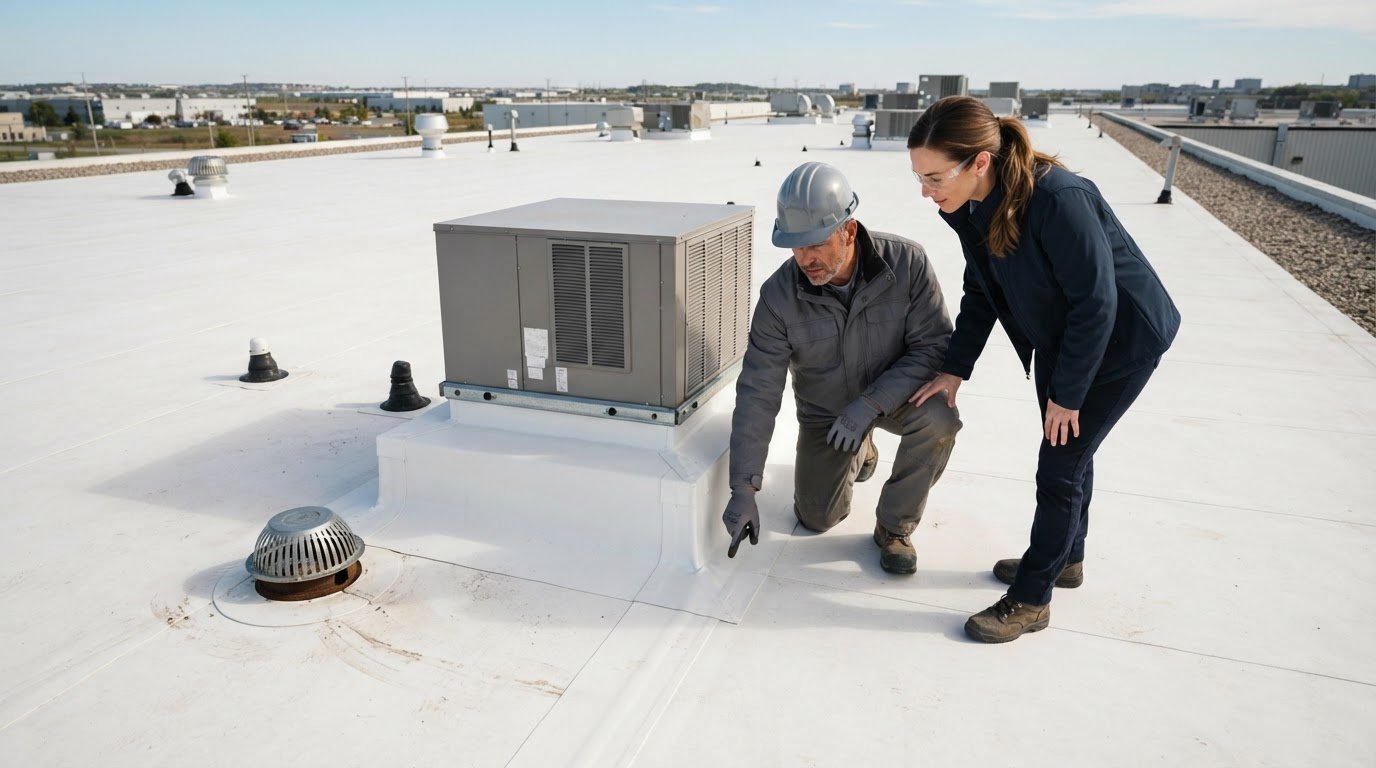

Article by
Harry Stanley III
Harry Stanley III is a construction marketing strategist and fractional CMO at H&A Marketing. He has helped construction companies grow through website strategy, SEO, paid advertising, branding, lead generation, CRM systems, and professional content. His past work includes helping Meraki Solar generate an additional $3.7 million in revenue in his first year and supporting American Builders as a fractional CMO. Today, Harry works directly with custom home builders and construction companies to build marketing systems designed to generate qualified leads and measurable growth.
Commercial roofing marketing should reach facility managers and property owners before they’re ready to discuss a restoration or replacement. Jobsite photos and useful project updates help them recognize your work and understand the types of buildings you serve.
Social media is only one part of the effort. Your website, search visibility, paid campaigns, and follow-up all shape what happens after a prospect notices your company.
This guide explains how commercial roofing marketing connects those touchpoints and supports qualified project inquiries. You’ll learn how to clarify your website, measure campaign activity, use paid search, and share social content that reflects your restoration and replacement work.
Key Takeaways
- Build local visibility around commercial roof restorations and replacements with focused service pages and location-specific content.
- Make it easy for facility managers and property owners to understand your services and submit a qualified project inquiry from any device.
- Track inquiries from first source through booked work to see which campaigns are contributing to your pipeline.
- Use paid search and social media to reach commercial roofing prospects with relevant project information and jobsite content.
- Connect your website, branding, SEO, and lead generation so each part supports a clearer path from discovery to follow-up.
What Makes Marketing Different for Commercial Roofing Contractors?
Commercial roofing marketing must speak to people responsible for properties, not just individual homeowners. A facility manager comparing restoration options needs information that supports an operational decision. A property owner considering replacement wants to understand the contractor’s commercial focus. Local SEO should connect these distinct needs with relevant services and the markets the roofing company serves.
Google Business Profile contributes to local visibility. Its categories, service information, business details, and project photos should reflect commercial roofing work. A photo of a completed commercial roof, paired with a concise project description, offers more context than a generic image. Accurate service-area details help property professionals see where the contractor works.
Location-specific pages should provide useful information for each market. Organize them around actual service coverage and commercial project needs, rather than swapping place names into duplicated copy. For example, a page can explain how the contractor approaches restoration projects for commercial properties in that market, using relevant details from the roofing team.
Targeted content can answer questions that arise before a building owner invites proposals. An article might explain what information helps evaluate a roof restoration or how a contractor documents a replacement project. Content should reflect the company’s actual process and commercial experience. Clear explanations help visitors assess fit without broad claims or residential roofing language.
Trust signals also need to match the scale and nature of commercial work. Project descriptions, customer feedback, consistent branding, and clear service information help a facility manager assess whether a contractor fits the building’s needs. A marketing provider can keep those details aligned across the profile and website, so prospects encounter a coherent picture during local research.
Local competition makes specificity more valuable than simply appearing in more searches. A contractor should focus its online presence on the services, property types, and markets it wants to serve. That means aligning profile content, location pages, and project examples around commercial restorations and replacements. A connected commercial roofing marketing strategy helps keep those elements consistent and relevant to qualified project inquiries.
Commercial Roofing Website Design and Lead Conversion
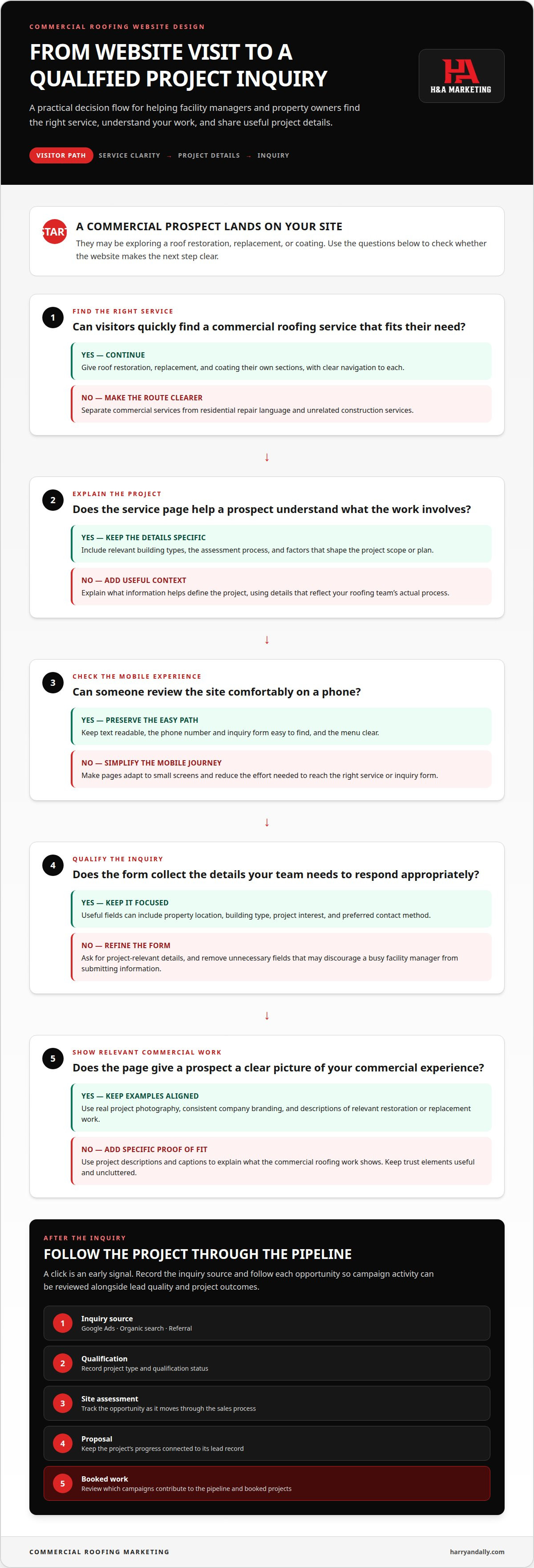
A commercial roofing website should help property owners identify the right service and take a clear next step. Give roof restoration, replacement, and coating their own sections. A facility manager exploring restoration shouldn’t have to sort through residential repair language or unrelated construction services. Clear navigation keeps the commercial project path visible from the first page.
Each service page needs details that help qualify an inquiry. For a replacement page, explain the types of commercial buildings served, the assessment process, and what information helps define a project’s scope. A restoration page can describe the work involved and the factors that shape a project plan. Specific examples help prospects understand what to expect without promising a particular result.
Mobile-friendly design matters because a property owner may open a contractor’s site on a phone while reviewing a building issue. Pages should adapt to small screens, keep text readable, and make the phone number and inquiry form easy to find. A clear menu guides visitors to the right service without repeated taps or a lengthy search.
A strong inquiry form asks for information that helps the sales team respond appropriately. It might request the property location, building type, project interest, and preferred contact method. These details help distinguish a commercial replacement inquiry from a general question. Keep the form focused, since unnecessary fields can discourage a busy facility manager from submitting details.
Trust elements should support the decision, not crowd the page. Use real project photography, clear company branding, and descriptions of relevant commercial work. A photo caption can identify a restoration or replacement project and explain what it shows. Consistent branding across pages helps contractors present a professional, recognizable business to owners reviewing options.
Website development also needs a plan for updates. When services, target areas, or project examples change, the relevant pages should reflect those changes. Search language matters too: a page targeting a phrase such as “commercial roof replacement” should answer that need directly, rather than repeating a broad keyword without context. A coordinated construction website design approach connects the page structure, mobile experience, and inquiry path. Together, these choices make the site a practical part of a steady commercial project pipeline.
Measuring Lead and Campaign Performance
For commercial roofing, a click is only an early signal. Track whether inquiries concern a commercial property, a restoration or replacement, and a project within your target area. Record the source, such as Google Ads, organic search, or a referral, when a lead enters your sales process. Then follow it through qualification, site assessment, proposal, and booked work. This reveals which campaigns attract projects worth pursuing, not just website activity.
Commercial roofing contractors can measure marketing performance through leads, calls, form fills, booked jobs, and campaign revenue. This measurement approach helps connect inquiries to outcomes. Call tracking, form-source details, and CRM records can link an inquiry to its campaign. Include project type and qualification status in lead records to distinguish a serious replacement opportunity from an unrelated inquiry.
Review campaign costs alongside lead quality. Cost per lead alone can hide the difference between an unqualified request and a commercial property assessment. Consider cost per lead, customer lifetime value, and seasonal performance trends when assessing marketing’s contribution. For roofing, compare spend with qualified opportunities, proposals, and closed projects. A campaign with fewer inquiries may still produce a stronger pipeline.
For commercial roofing campaigns, assess calls and forms for project fit, including property type, location, and whether the inquiry concerns a restoration or replacement. Track these details alongside campaign costs to see which efforts bring in relevant opportunities.
Professionally managed PPC campaigns need clear targets and regular review. Align search terms with commercial restoration or replacement pages, exclude irrelevant searches, and assess calls and forms for project fit. Review campaign reports alongside sales records. If clicks rise but qualified commercial inquiries don’t, adjust the targeting, landing page, or follow-up.
Pay-per-lead campaigns require a different review. Before committing, define what counts as a valid commercial roofing lead, how location and project type are screened, and how duplicate or irrelevant inquiries are handled. Clarify whether leads are exclusive or shared, and how lead delivery is recorded. A construction lead generation program should connect source details with follow-up and sales outcomes. That gives contractors a clearer basis for judging campaigns, budgets, and pipeline contribution.
Paid Search for High-Intent Commercial Roofing Projects
Paid search can put a commercial roofing company in front of property decision-makers actively seeking a project solution. A search such as “commercial roof replacement in my area” signals a different need from a broad roofing query. Campaign targeting should match the service, service area, and landing page. Restoration, replacement, and roof coating each need relevant ad copy and a clear destination.
Search ads can support visibility while organic rankings develop. About 3% of people click past the top five organic search results. That makes paid ads one way to appear prominently for specific searches, though placement alone doesn’t make an inquiry qualified. A campaign manager should review search terms, location settings, calls, and forms, then reduce exposure to irrelevant searches such as residential repair if the contractor serves commercial properties only.
Display advertising serves a different purpose. Rather than responding only to an active search, display ads can put a project message in front of audiences as they browse participating sites. For example, an ad can show a commercial restoration message to people who previously visited the contractor’s restoration page. Link it to a matching page, not a generic homepage, so the next step is clear.
AI and voice search visibility starts with useful, accessible website information. Someone might ask a voice assistant, “Who handles commercial roof replacement in my area?” A search-focused page should naturally name the service and coverage area, explain the project, and make the company’s contact details easy to find. Organize headings around real customer questions and keep service descriptions consistent across the website and business profile. These steps create a clear SEO foundation without trying to predict every AI answer.
For voice searches, concise answers help visitors find relevant information quickly. A page might explain what details help scope a commercial roof assessment, then provide a direct path to the project inquiry form. Well-structured text is easier for search engines and AI systems to interpret than vague promotional copy. SEO can align pages with the phrases property managers use, while paid campaigns capture demand for focused project terms.
Effective campaign management connects the search, ad, landing page, and sales record. Track whether inquiries involve commercial buildings, target locations, and restoration or replacement work. If a search campaign brings traffic but few qualified conversations, review the search query, page, and form together. When the message attracts the right projects, use those insights to refine targeting and improve visibility across paid and organic search.
Social Media Marketing for Commercial Roofing Contractors
Social media works best as a proof engine, not a stream of sales pitches. Commercial roofing contractors can use LinkedIn, Facebook, and Instagram to show the work behind a restoration or replacement. A consistent presence keeps project examples visible between a property manager’s initial research and next roofing decision. Each post should reinforce the type of commercial work the contractor wants to win.
Build posts around real project stages. A replacement project might include a before photo, a short progress update, and an image of the completed roof. Explain the building type, roofing challenge, and work performed, while avoiding confidential details. For a restoration, describe the property concern and the scope addressed. Specific context helps facility managers see whether the project resembles their own building.
Give each platform a clear role. LinkedIn can carry a project recap for property professionals, with details about the building and work completed. Facebook can share community-facing project updates, while Instagram can showcase jobsite images and short clips. The same project can appear across platforms, but tailor the caption and format instead of copying identical text everywhere.
Consistency comes from a manageable editorial plan, not constant posting. A monthly plan could rotate project spotlights, team expertise, restoration explanations, and replacement considerations. For example, one post can explain what a roof assessment covers; another can show a completed commercial project. A social media marketing plan keeps those themes coordinated and makes publishing easier to sustain.
Make every post useful to a potential buyer. Include a direct next step, such as viewing the relevant service page or discussing a commercial roofing project. A post about roof coating should lead to information about coating, not a generic homepage. Use clear captions and accessible descriptions so the project story makes sense even when viewers don’t watch a clip or open every image.
Measure more than reactions. Track which platforms send visitors to service pages, which posts prompt inquiries, and whether those inquiries fit the contractor’s project focus. A comment or share can signal interest, but a qualified restoration or replacement conversation matters more. Review results alongside website inquiries and sales follow-up. This shows whether social activity supports awareness, project evaluation, or a real pipeline opportunity.
H&A Marketing
H&A Marketing helps commercial roofing contractors connect their online presence with the restoration and replacement projects they want to pursue. The right support depends on what’s holding your marketing back. A dated website, unclear brand, weak search visibility, or inquiries that don’t fit your services each call for a different focus.
Website design gives prospects a clearer path from discovery to inquiry. A facility manager searching for a commercial roof replacement should find relevant service information, project examples, and a straightforward way to start a conversation. H&A Marketing can shape your site around commercial roofing services and the questions property owners consider before discussing a project.
Branding makes that experience consistent. A clear logo and visual identity carry through your website and marketing materials, helping prospects recognize your company as they evaluate contractors. If your business focuses on commercial restorations and replacements, the brand should reflect that work rather than leave visitors guessing about your specialty.
Search engine optimization supports discovery by aligning website pages with relevant services, target locations, and the language prospective customers use. A commercial roof restoration page should speak directly to that service, while a replacement page should address replacement inquiries. This structure helps searchers find information that matches their needs and a relevant next step.
Lead generation connects visibility with the opportunity to start qualified project conversations. Focus on attracting inquiries that align with your commercial work, service area, and project goals. Helpful website content, clear service pages, and consistent branding support that path from an initial search to an inquiry.
H&A Marketing connects website design, branding, search engine optimization, and lead generation through a unified marketing strategy. Your input shapes the approach: the projects you want, the areas you serve, and the strengths that set your commercial roofing work apart. That gives the marketing effort a practical foundation and keeps it tied to your business priorities.
If you’re ready to discuss a clearer marketing approach for commercial roofing restorations or replacements, contact H&A Marketing.
Frequently Asked Questions
How fast can I see results?
Timing depends on the channel, market, and starting point. Paid campaigns can bring visitors sooner, while organic visibility and brand recognition take sustained effort. For commercial roofing, assess progress through qualified inquiries, project discussions, and proposal opportunities, not clicks alone. Because sales cycles can be long, a campaign’s contribution may become clear only as prospects move through assessment and decision-making.
How can a marketing provider improve local SEO and Google Maps visibility?
Align the business profile and website around your actual commercial services and service area. Organize project details so searchers see relevant evidence, such as completed restoration work or replacement expertise. Accurate business information across listings supports a consistent presence and helps property decision-makers find a contractor whose work matches their building needs.
How can a marketing provider help commercial roofers earn more customer reviews online?
Create a straightforward review-request process for completed projects. After a restoration, for example, the team can invite the property contact to share feedback about communication and project delivery. Clear, timely requests make it easier for customers to respond. You can also draft professional replies that acknowledge feedback without disclosing private project details or making unsupported promises.
Which social media platforms are most effective for commercial roofing?
Choose platforms based on the decision-makers you want to reach and the content you can maintain. LinkedIn can support project updates for property professionals, while Instagram or Facebook can showcase jobsite progress and completed work. A restoration case recap can cover the building challenge and work performed, with a link to relevant service information. Keep each post useful and focused on commercial roofing.
What should commercial roofers look for in a lead-generating website?
A useful website makes commercial services easy to understand and inquiries easy to submit. Provide clear paths to restoration and replacement information, relevant project examples, and forms that capture the property type and project need. Mobile usability matters for facility managers reviewing a contractor between site visits. The website should help prospects assess fit before starting a sales conversation.
How can a marketing provider track digital marketing leads and conversions?
Record where an inquiry originated, what project it concerns, and how it progresses through sales. For example, a lead record might connect an organic search visit with a restoration inquiry, assessment, and proposal. Reviewing these stages alongside campaign activity shows which channels contribute qualified opportunities and where follow-up or lead qualification needs attention.
How can a marketing provider target commercial roofing service areas online?
Align campaign geography and location-focused website content with the areas your company serves. Each page should provide useful local context and describe relevant commercial work, rather than simply swapping in place names. Clear targeting helps limit inquiries from outside your service area. The same principle applies to digital marketing for electricians, but commercial roofers need content centered on property-scale restoration and replacement projects.
