

Article by
Harry Stanley III
Harry Stanley III is a construction marketing strategist and fractional CMO at H&A Marketing. He has helped construction companies grow through website strategy, SEO, paid advertising, branding, lead generation, CRM systems, and professional content. His past work includes helping Meraki Solar generate an additional $3.7 million in revenue in his first year and supporting American Builders as a fractional CMO. Today, Harry works directly with custom home builders and construction companies to build marketing systems designed to generate qualified leads and measurable growth.
Commercial roofing marketing works best when it reaches the people who own, manage, and maintain commercial buildings. To understand how to market a commercial roofing company, tailor your message to those buyers, show clear evidence of your restoration and replacement work, and make it easy to start a conversation. Roofing trade shows also offer a way to meet industry contacts and build relationships in person.
Commercial projects depend on trust, timing, and a strong pipeline, not just a high volume of inquiries. A practical approach to how to market a commercial roofing company starts with reaching the right decision-makers and supporting a longer sales process, from the first impression through follow-up.
This guide explains how to identify the building types and customer segments you want to reach, tailor your marketing to their priorities, and use roofing trade shows with a clear plan. The International Roofing Expo takes place in February each year, offering an opportunity for face-to-face outreach. You’ll also learn how to connect trade show conversations with your wider marketing so prospects have a clear next step.
Key Takeaways
- Choose target building types and buyer roles first, then shape your message around their roofing priorities.
- Make roofing trade shows more productive by setting an outreach goal and planning how to follow up afterward.
- Coordinate your website, search visibility, and advertising so each channel supports the projects you want to win.
- Qualify inquiries by learning who manages the property, what the roof needs, and where the project stands.
- Strengthen your local search presence with clear service information and useful signals that help nearby buyers find you.
Commercial building types and customer segments
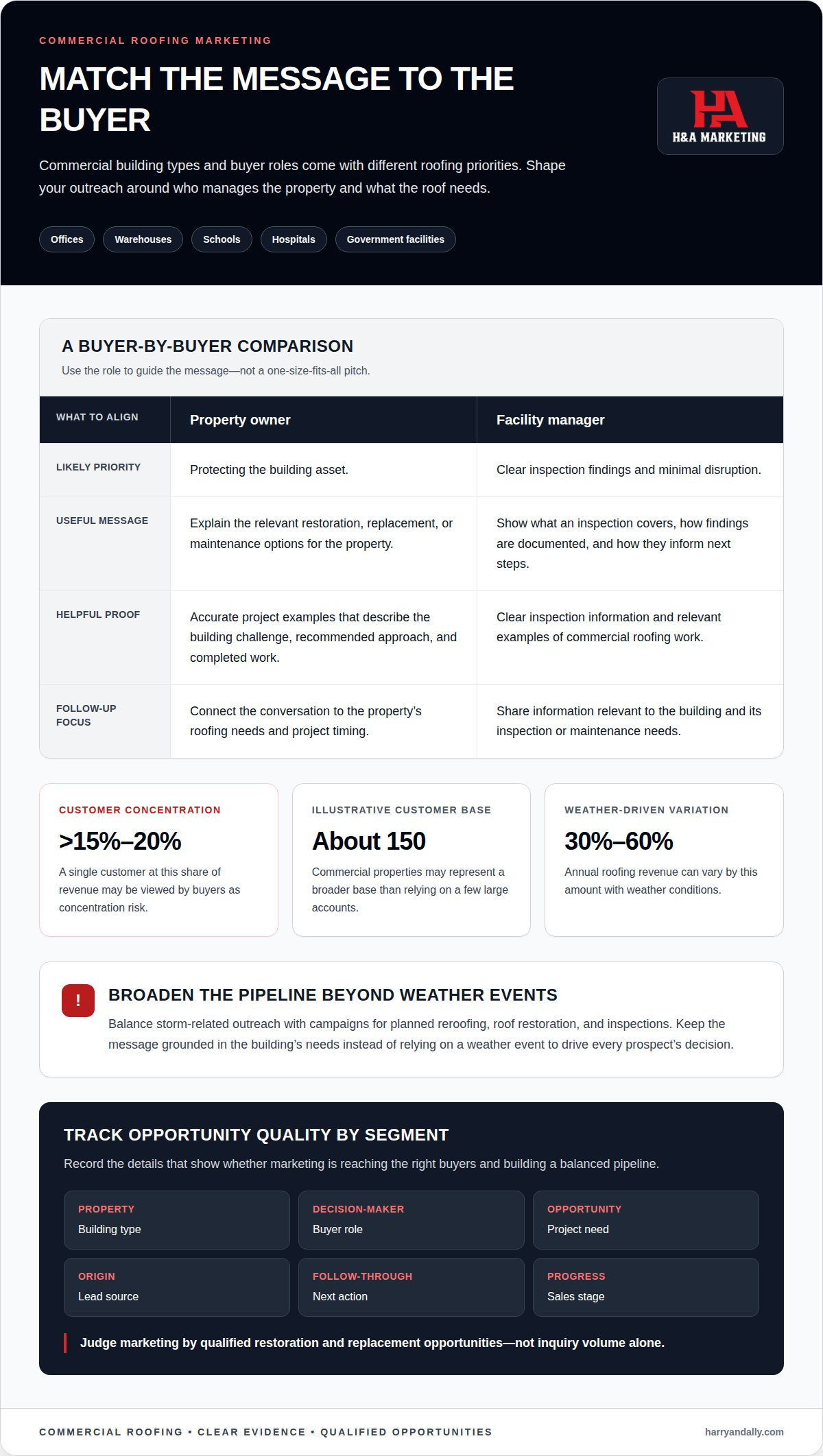
- Identify building types and buyer roles before shaping your message. Offices, warehouses, schools, hospitals, and government facilities have different roofing needs and approval processes. A property owner may prioritize asset protection, while a facility manager may need clear inspection findings and minimal disruption. Create a simple segment list, then match each group with relevant restoration, replacement, or maintenance information.
Commercial revenue can still become concentrated. Buyers may view a single customer representing more than 15% to 20% of revenue as concentration risk. Review your customer list by building type and account, then identify gaps. A contractor serving about 150 commercial properties, for example, may have a broader base than one relying on a few large accounts.
- Build a plan that reduces dependence on one or two customers. Promote your work to several segments, such as industrial property owners, school districts, and property managers. Track qualified opportunities by segment, not just total inquiries. This shows whether your outreach is broadening the pipeline or generating more conversations with existing accounts.
Weather can make annual roofing revenue vary by 30% to 60%. Storm-related activity may create immediate demand, but it can also make revenue less predictable. Balance storm outreach with campaigns for planned reroofing, roof restoration, and inspections. Keep acquisition messages grounded in the building’s needs, rather than relying on a weather event to drive every prospect’s decision.
- Set a monthly marketing budget based on your sales capacity, target projects, and channel costs. There is no single amount that fits every commercial roofer. The right budget depends on market coverage, competition, campaign mix, and capacity to handle leads. Start with a defined test budget, then assess qualified opportunities and sales progress before reallocating funds.
Use Google Ads to target searches for commercial roof replacement or restoration in your service area. Estimate cost per lead by dividing campaign spend by the leads received, then review which leads match your project types and buyer roles. Track calls and forms through the sales process. A low-cost inquiry has little value if it never becomes a qualified opportunity.
- Publish content that helps owners and facility managers assess roofing decisions. Explain restoration versus replacement, show how an inspection informs next steps, and describe work on a warehouse or school roof. A useful case study outlines the building challenge, the recommended approach, and the completed work. Use project photos only with permission and describe the job accurately.
Present maintenance plans and inspections as practical ways to identify roof conditions and plan work. Describe what an inspection covers, how findings are documented, and how owners can use them to prioritize repairs or future replacement. Follow up with information relevant to each property type instead of sending every prospect the same generic offer.
- Measure marketing by qualified leads, not inquiry volume alone. Record building type, buyer role, project need, source, next action, and sales stage in a lead tracker. Review which campaigns generate realistic restoration or replacement opportunities, then compare their progress and eventual revenue. This gives you a clearer view of marketing ROI than counting clicks or form submissions alone.
Make customer and supplier relationships part of your acquisition strategy. Ask satisfied commercial customers for introductions to other property owners, and coordinate with suppliers around the materials and systems your crews install. A mix of customer segments, repeat maintenance work, and referrals can make revenue more predictable and reduce dependence on one account.
Roofing industry trade shows
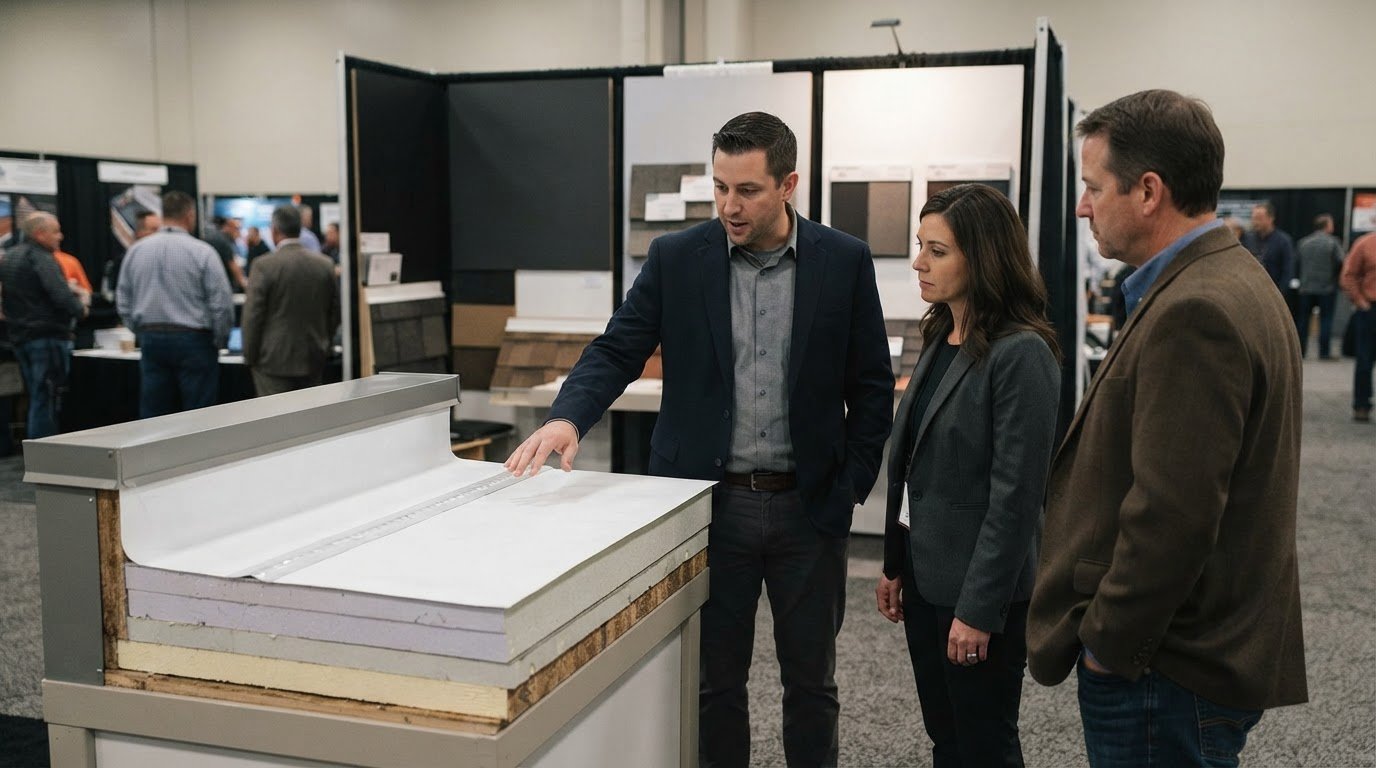
- Choose an event based on the people you need to meet. The International Roofing Expo gives commercial contractors a place to connect with roofing industry professionals. Define a business goal before registering: meet facility managers, strengthen supplier relationships, or learn about systems relevant to restoration and replacement. Decide what a useful conversation looks like for your business. A clear goal makes your schedule more productive than simply walking the show floor.
- Plan meetings before you arrive. Make a focused list of suppliers, manufacturers, property professionals, and contractors you want to speak with. Prepare a concise introduction that names your commercial focus, such as warehouse roof restoration or replacement work for multi-building owners. Bring specific questions about materials, project coordination, or customer demand. Preparation helps you gather relevant insight and use your event time well.
- Give each conversation a practical next step. Ask whether the contact wants project photos, a follow-up call, or information about a roofing system. Record their role and interest promptly, such as “facility manager, reviewing restoration options.” This detail makes follow-up personal and helps distinguish a business opportunity from a brief introduction. Don’t collect contacts without a clear reason to reconnect.
- Use the event to demonstrate your capabilities, not just promote your company. Bring examples of how your crews approach commercial restorations, replacements, and maintenance. Explain the building challenge, your recommended approach, and the work completed. If you discuss recurring maintenance, describe how inspections can help owners plan roofing work. Keep claims specific, accurate, and relevant to each prospect’s building.
- Feature credentials accurately in trade show materials and follow-up. Which licenses, certifications, warranties, and insurance credentials should roofing companies highlight in their marketing? Include current credentials that apply to your work and project scope, and describe warranties using their actual terms. Clear details help owners and property managers assess your business without confusing credentials with guarantees.
After the event, send each contact the information they requested. A supplier may want to continue a materials discussion, while a property manager may need a relevant project example. Organize contacts by their next action, then record whether each exchange develops into an opportunity. Review which conversations support recurring relationships and help position your roofing business for future commercial work.
What are the most effective marketing channels for a commercial roofing company?
- Make your website the destination for every campaign. Give commercial roof replacement, restoration, and coating work separate, clear service pages. Each page should explain the customer’s problem, your approach, and the next step, such as requesting an assessment. Add project photos and examples that show the scale and type of work you handle. A property owner arriving from a referral or ad should quickly understand whether your company fits the building’s needs.
- Build search visibility around the services and locations you actually serve. Create useful pages for phrases such as commercial roof restoration and warehouse roof replacement instead of relying on one broad homepage. Add practical details about materials, project planning, and building use. Keep your business information consistent across your website and local profiles. Search engine optimization supports ongoing discovery, while clear service pages give owners a relevant place to continue.
- Use Google Ads to reach people actively searching for commercial roofing help. Separate campaigns by intent, such as replacement, restoration, or roof coating, and send each ad to its matching page. Set geographic targeting around the areas your crews can serve. Review search terms regularly and exclude irrelevant queries, such as residential repair searches, if they don’t match your work. Measure calls and form submissions, as well as whether inquiries fit your project scope.
- Use LinkedIn and other social channels to stay visible between active searches. Share a completed project, your crew’s restoration process, or a short explanation of how roof conditions affect a replacement decision. Tie each post to a useful takeaway for owners, facility managers, or building operators. Jobsite photography can make technical work easier to understand, while consistent branding helps prospects recognize your company across posts, proposals, and your website.
- Connect every channel to prompt follow-up. Record whether an inquiry came from Google Ads, organic search, a referral, or a social post. Assign an owner to each new lead and set a clear next action, such as scheduling a call or sending relevant project information. A facility manager who downloads a restoration guide may need different follow-up from an owner requesting replacement pricing. A coordinated system helps your team see which channels contribute to real opportunities.
How can commercial roofers generate qualified leads from property managers and building owners?
- Define a qualified opportunity before trying to increase inquiries. Set clear criteria for the buildings, project types, service areas, and decision-makers your crews can support. For example, prioritize a warehouse owner planning a replacement over a residential repair inquiry. Ask whether the contact owns or manages the property, or influences the roofing decision. Record the roof concern and the project’s expected next step.
Use those criteria in your website forms and sales conversations. Ask for the building type, location, current roof issue, and preferred contact method. Keep the form focused so busy property managers can complete it. A short intake process gives your team enough context to route a restoration lead differently from a full replacement request.
- Build a focused list of commercial properties and relevant decision-makers. Start with building types that match your crew’s experience, such as warehouses, offices, or schools. Identify property owners, facility managers, and property management firms connected to those buildings. Tailor outreach to each role: an owner may need a clear view of asset needs, while a facility manager may value concise project coordination details.
Make each message specific. Refer to the property type or operational concern, then offer a useful next step, such as discussing roof conditions or sharing a relevant project example. Avoid sending the same generic pitch to every contact. A tailored message gives the recipient a reason to respond and helps your sales team start with a real business need.
- Create a clear path from interest to conversation. A landing page for commercial restoration should explain the service, identify suitable building types, and invite visitors to describe their roof concern. A replacement page can address project planning and show examples of comparable work. Keep the call to action direct, such as requesting a project discussion or submitting building details.
Track calls, forms, referrals, and trade show contacts separately. If a property manager calls after seeing a project post, record the source and the property involved. This helps distinguish commercial prospects from unrelated inquiries and shows which outreach leads to meaningful conversations.
- Use proof that addresses buyer concerns. Share a case study with the building type, roofing challenge, work performed, and documented results. For example, explain how a restoration project addressed an aging roof without making unsupported claims. Include clear project photos and describe the work plainly. Owners need evidence relevant to their building, not broad marketing promises.
Ask satisfied commercial customers for introductions when a completed project gives you a natural reason to reconnect. A property manager may oversee several buildings or know other owners with similar needs. Keep your request professional and specific, and make it easy for them to share your contact information.
- Follow up consistently with a simple lead tracker. Record the contact’s role, building, need, lead source, last conversation, and agreed next action. A manager waiting to discuss an inspection should not receive the same follow-up as an owner comparing replacement proposals. Assign responsibility for each next step so qualified prospects don’t fall through the cracks between marketing and sales.
Review lead quality with your sales team. Note which inquiries match your target building types, advance to a site conversation, and become proposals. Use that feedback to refine account lists, outreach messages, and landing pages. The goal is a stronger commercial pipeline, not simply a larger inbox.
What local SEO strategies help commercial roofing companies rank in Google Maps?
- Complete your Google Business Profile with accurate commercial roofing details. Use your real business name, current phone number, website, and operating hours. Choose the closest accurate primary category, then add services such as commercial roof replacement and restoration. Make the description specific by explaining the buildings you serve and the work you perform. Don’t add keywords to your business name unless they’re part of its real-world name.
Check that your profile details match your website. Consistent names and phone numbers make it easier for owners to recognize and contact your company.
- Describe your service coverage accurately on your profile and website. Focus on the commercial work you handle and the customers you serve, rather than creating pages that repeat the same claims. A useful service page can explain restoration for industrial properties, signs that may prompt an assessment, and how owners can begin a project discussion.
Give each page a distinct purpose. Clear, relevant information helps visitors decide whether your services fit their building.
- Build a steady review process with real customers. After completing a commercial replacement or restoration, invite the customer to share an honest review. Make the request part of your project closeout. Respond professionally to every review, including critical feedback, without sharing private project details. Thoughtful replies show prospects that your company takes customer communication seriously.
- Add current project photos and updates to your profile. A warehouse restoration, roof coating project, or crew preparing for a commercial replacement can help prospects understand your work. Use accurate captions that describe the project without overstating your team’s contribution. On your website, connect each example to relevant service information so owners can explore work similar to their needs.
- Track profile activity alongside lead quality. Record calls and website inquiries from your profile, then note the building type and requested work. Profile views matter less when inquiries don’t fit your commercial focus. If qualified calls slow down, review contact details, service descriptions, website content, and recent project updates together.
Local search is one part of commercial roofing marketing. Keep your profile and website aligned so property managers can find relevant information and take a clear next step.
H&A Marketing: Website Design
H&A Marketing helps commercial roofing contractors connect their marketing with the projects they want to win. Turn to the team when your website doesn’t clearly explain your commercial restoration and replacement work, or qualified prospects struggle to understand your services and take the next step.
A website should make your services easy to navigate, show relevant project experience, and give property managers a clear way to inquire. H&A Marketing’s website design, branding, search engine optimization, and lead generation support the path from discovery to sales conversation. Each element should reinforce the same commercial focus, from service page language to how inquiries are captured.
To discuss a connected approach for your roofing business, visit H&A Marketing’s commercial roofing marketing page.
Build the next stage of your roofing pipeline
A lasting answer to how to market a commercial roofing company starts with a clear next move: choose the gap most likely to slow your sales pipeline. You might need to clarify your commercial work for prospects, attract more relevant inquiries, or improve how new leads move into sales conversations. Pick one priority, assign ownership, and agree on how to measure progress before adding more activity.
To decide how to market a commercial roofing company effectively, connect that priority to your sales process. A coordinated commercial roofing marketing approach should help the right building owners find you, understand your work, and take a useful next step. Sales follow-up should carry that conversation forward. Reviewing the path together helps reveal where prospects lose momentum and what to improve next.
Take the next step when you’re ready to build a stronger commercial roofing pipeline.
H&A Marketing for Commercial Roofing Marketing
H&A Marketing offers services to support commercial roofing marketing, including Website Design, Logo Design & Branding, Search Engine Optimization, Lead Generation, Social Media Management, and Video & Photo.
Turn to H&A Marketing when you’re ready to put these services to work for your company. Choose the areas that fit your needs, from shaping your brand and website to creating content and generating leads.
Frequently Asked Questions
How should a commercial roofing company build a website that converts leads?
Build your website around the decisions commercial buyers need to make. Keep navigation simple, ensure pages work well on mobile devices, and explain the differences between restoration, replacement, and maintenance. Include a clear contact option on relevant pages, with form fields that capture property type and roofing need. Answer common questions about project planning, access, and coordinating work around building operations.
How can commercial roofers build referral partnerships with property managers and contractors?
Build referral relationships by being useful before asking for introductions. Share concise project updates with property managers, respond reliably to their roofing questions, and make it easy for them to explain your services to owners. Connect with general contractors whose projects need commercial roofing expertise. Agree on how introductions will be handled, follow up promptly, and keep partners informed about relevant project progress without sharing confidential details.
How much should a commercial roofing company spend on marketing per month?
There is no single monthly amount that fits every commercial roofer. Set a test budget based on sales capacity, target projects, channel costs, market coverage, and lead-handling capacity. Then review qualified opportunities and sales progress before reallocating funds.
