
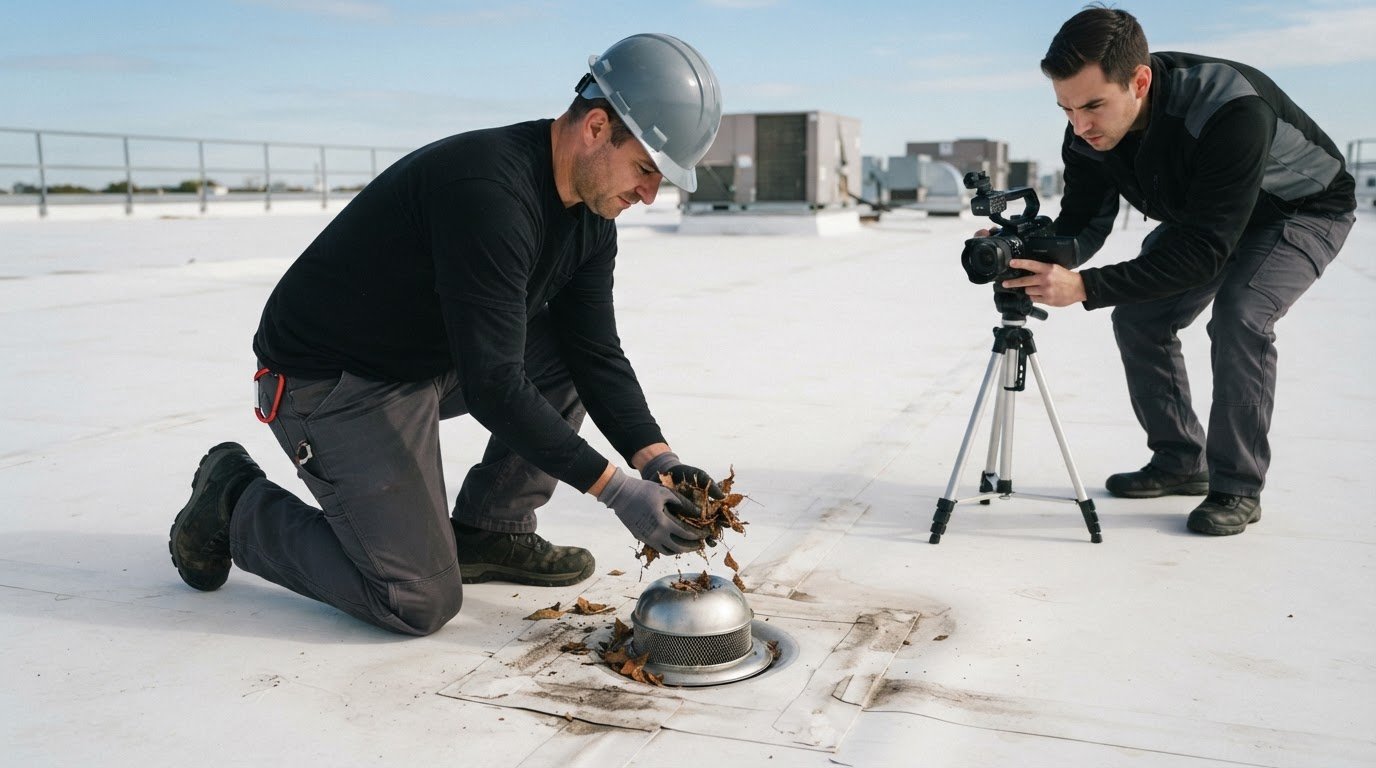

Article by
Harry Stanley III
Harry Stanley III is a construction marketing strategist and fractional CMO at H&A Marketing. He has helped construction companies grow through website strategy, SEO, paid advertising, branding, lead generation, CRM systems, and professional content. His past work includes helping Meraki Solar generate an additional $3.7 million in revenue in his first year and supporting American Builders as a fractional CMO. Today, Harry works directly with custom home builders and construction companies to build marketing systems designed to generate qualified leads and measurable growth.
A finished roof shows the result, but the story behind the work gives people a reason to pay attention. Useful social media content ideas for commercial roofers include before-and-after photos, short roof walk-throughs, progress clips, practical maintenance tips, and answers to facility managers’ common questions. Each post can show what your team does and help commercial property owners understand when to explore a restoration or replacement.
It’s easy to default to project photos or promotional posts, especially when the crew is busy and content has to fit around the job. A stronger mix combines project showcases with short videos and useful explanations that make roofing work easier to understand. Use these ideas to engage your audience, share practical guidance, and turn real jobs and everyday expertise into posts commercial roofing prospects can follow.
Key Takeaways
- Shape posts around facility managers’ priorities, such as roof condition, project disruption, and planning a restoration or replacement.
- Use behind-the-scenes updates to show the people, planning, and workmanship behind commercial roofing projects.
- Turn completed jobs into clear project recaps that explain the challenge, the work, and the outcome.
- Make seasonal roof tips timely and practical, connecting weather changes to maintenance and preparation.
- Use short videos to explain roofing concepts and show project details, while keeping safety clear for viewers.
1. Identifying and engaging a roofing business's target audience
Start with the people who influence commercial roof decisions: facility managers, property owners, and building operators. A facility manager may care about leaks and disruption; an owner may focus on the roof’s condition and whether restoration or replacement makes sense. Build posts around these priorities instead of treating every follower like a residential homeowner.
Facebook and Instagram can both support this approach. Use Facebook for project updates, practical posts, and conversations with business contacts. Use Instagram to show visual details, including roof conditions, crews at work, and project progress. For example, a carousel can pair a roof overview with close-ups of drainage, coating, or completed work. Choose platforms where your audience engages, then adapt the format rather than posting identical content everywhere.
Commercial roofing searches are often specific. Useful long-tail phrases might include “commercial roof restoration for a warehouse” or “roof coating for an office building.” Turn these topics into posts that answer clear questions, such as what a restoration project involves or which roof conditions may warrant closer assessment. Keep the language natural and explain technical terms for property owners who don’t work in roofing.
Before-and-after photos make project work easier to understand. Use a consistent angle where possible, and explain what changed, such as applying a new coating to a worn roof. Add a short caption naming the building type and work completed. Get permission before sharing identifiable property details, and don’t imply that one project guarantees the same outcome elsewhere.
What roofing advertising rules and claims should contractors follow on social media? Describe completed work accurately, use photos with permission, and avoid unsupported claims about savings, lifespan, or guaranteed results. Make the next step clear, such as inviting a facility manager to discuss a roof assessment, without suggesting every building needs the same solution.
What educational roofing topics can commercial roofers post about? Share seasonal preparation, storm-related roof observations, drainage concerns, and explanations of restoration, replacement, and coating options. A fall post might explain why leaves and debris matter; a storm-season post could outline visible signs that warrant professional attention.
What social media content generates commercial roofing leads? Project recaps, practical roof tips, and clear service explanations can help facility managers recognize a relevant need. Pair each post with a useful next step, such as directing interested readers to a project inquiry form or inviting a conversation about their building.
Consistent publishing takes planning as well as jobsite material. A simple calendar can rotate project photos, audience questions, and seasonal topics, while social media planning and management keeps those posts aligned with your commercial roofing work.
2. Behind-the-scenes content and personal brand stories
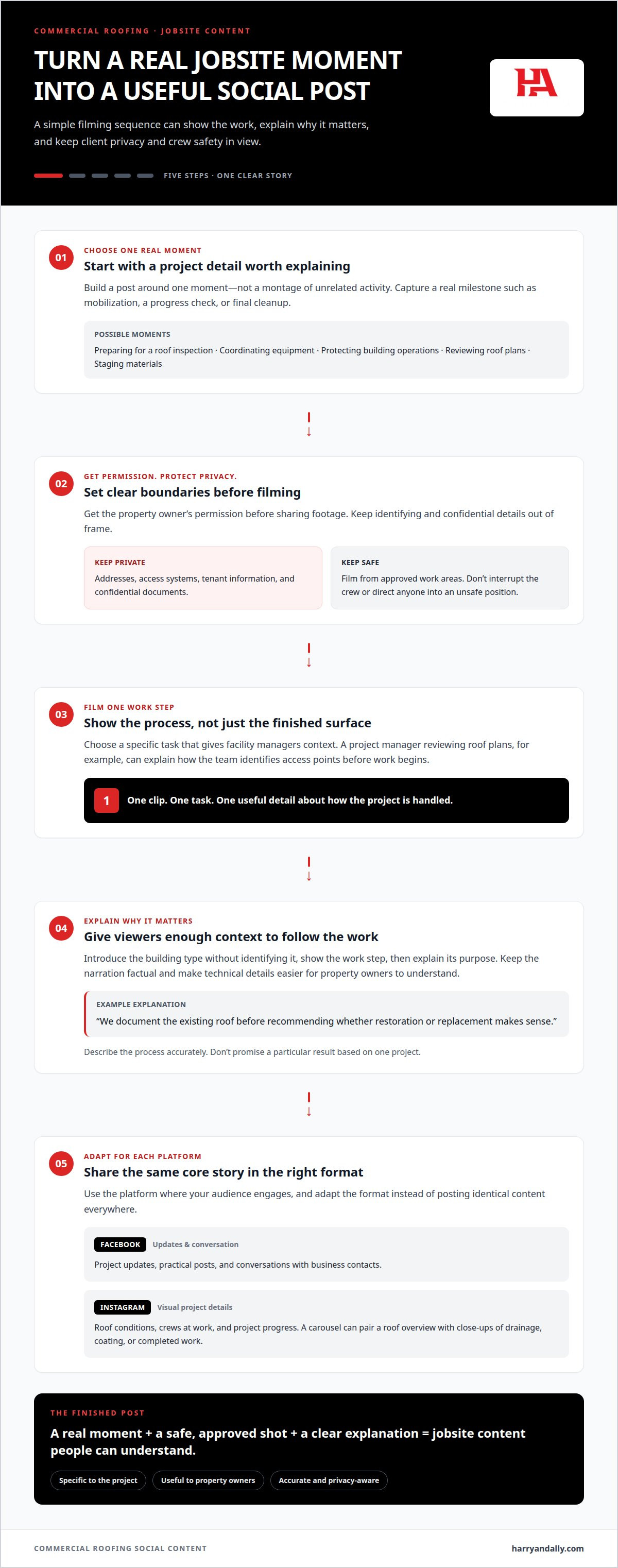
A commercial roofing project has a story beyond its finished surface. Show how the crew prepares for a roof inspection, coordinates equipment, or protects building operations during work. A short clip of a foreman explaining the day’s priorities gives facility managers context. It also makes the people and planning behind a restoration or replacement visible.
Build each post around one moment, not a montage of unrelated activity. For example, film a project manager reviewing roof plans, then explain how the team identifies access points before work begins. Another post could show material staging and explain how organization helps keep the jobsite orderly. Specific details make behind-the-scenes footage educational, not just promotional.
Crew stories can introduce the experience and judgment involved in commercial roofing. Ask a team member to explain one task they handle, such as checking drainage areas or documenting roof conditions. Focus on their role and the project process, not personal details they haven’t agreed to share. A short introduction can make a technical service easier to understand.
How can commercial roofers share jobsite content while protecting client privacy and safety? Get the property owner’s permission before filming, and avoid revealing addresses, access systems, tenant information, or confidential documents. Film from approved work areas without interrupting the crew or directing anyone into an unsafe position.
Use a simple filming sequence to create clear, useful clips: introduce the building type without identifying it, show one work step, then explain why it matters. For instance, a supervisor can describe how the crew documents an existing roof before recommending restoration or replacement. Keep the narration factual, and don’t promise a particular result based on one project.
Personal brand stories can also explain how your company approaches communication. A project manager might describe how they share updates with a facility manager or how the crew plans around a building’s daily operations. These examples show your process without disclosing client details. Share the same core story across relevant channels, adapting the caption and video format for each platform.
Plan footage around real milestones, such as mobilization, a progress check, or final cleanup. A phone clip with clear narration can work; polished production isn’t required for every update. For more deliberate project storytelling, commercial roofing video and photography can help turn jobsite moments into consistent social content.
3. Customer testimonials and project recaps
A useful project recap gives property owners context, not just a photo of the finished roof. Explain the building’s challenge, the work completed, and the result the client approved you to describe. For example, a warehouse recap might cover why the owner considered restoration, how the team approached the project, and what changed afterward. Keep claims specific to that job.
Customer reviews add a first-person perspective, but the wording should remain authentic. Ask a satisfied client if they’re willing to share feedback, then use their exact approved words. Don’t rewrite praise into a stronger claim or imply one customer’s experience is typical. A short review paired with a project detail can help readers understand what working with your team involved.
What project photos and videos should commercial roofers share? Show useful stages, such as the roof before work, a progress view, and the completed surface. Add a caption explaining the project type, work performed, and a relevant detail, such as improved drainage or a coating application.
Before-and-after posts work best when viewers can compare the same area. Use a similar angle and framing for both photos, then label each stage clearly. A short video can walk viewers through the completed roof, while a carousel can show the original condition, work underway, and final view. This makes the project story easy to follow.
A local project spotlight can connect your work to the commercial buildings your audience knows. Identify the city or general area, describe the property type, and explain the roofing challenge without exposing private client information. For example, a post about a local distribution facility could discuss a restoration process without naming the tenant or sharing its address.
Choose the format to suit both the platform and the story. A single photo can highlight a clear visual change; a short video can show scale or details; a text post can feature a client’s approved review. Keep captions direct, answer likely project questions, and give readers a relevant next step, such as discussing a similar roof concern.
Project posts also create opportunities for useful follow-up. If someone asks about materials, timing, or the reason for restoration, answer only with details that apply to that specific job. Those answers can build visibility and help other facility managers understand the decision process without turning a recap into a blanket promise.
Keep a simple record of each project’s approved photos, review, location details, and key facts. This gives your team a reliable source for accurate social posts while respecting the client’s preferred level of privacy.
4. Seasonal roof maintenance and weather-preparation tips
A seasonal post gives facility managers a timely reason to review roof conditions. Build a calendar around spring, summer, fall, and winter, and connect each reminder to a practical action. For example, a spring post can recommend checking gutters after winter and arranging a roof review if drainage concerns appear. Keep the message relevant to commercial buildings and their operating needs.
In spring, focus on what winter may have left behind. A post could explain why facility teams should look for blocked drainage, visible debris, or signs of water entry from accessible areas. Pair the reminder with a clear next step: document the concern and schedule a professional assessment. Don’t suggest that staff climb onto the roof to inspect it.
Summer content can address heat and sun exposure. Explain that roofing materials are exposed to these conditions, then suggest discussing visible changes or maintenance questions with a roofing professional. For example, ask facility managers to note where interior leaks or roof concerns have appeared. That information gives a later assessment a clearer starting point.
As fall approaches, remind building teams to prepare for winter by addressing leaves and debris around roof drainage areas. Make the post specific: explain why blocked drains deserve attention before colder weather, and encourage facility managers to coordinate roof access through their usual maintenance process. A seasonal reminder is more useful when it names an action, not just a change in weather.
Winter posts can cover snow, ice, and signs of potential ice dams. Keep the guidance educational: describe warning signs that warrant professional attention and clarify that the post isn’t advising staff to climb onto a roof. A concise reminder can help property teams record interior water concerns and contact their roofing provider for an assessment.
Storm-related content should help the audience know what to do after severe weather without making unsupported damage claims. Encourage facility managers to note visible changes from the ground, record leaks inside the building, and document when concerns appeared. Explain that photos from safe, accessible areas can help organize information for a later roof review.
To publish consistently, assign each seasonal reminder a place in the content calendar and connect it to a clear audience need. For example, pair a spring drainage post with a summer heat-related tip, then plan fall debris reminders and winter ice-dam education. This structure creates a useful rhythm without making every post promotional. Consider local weather patterns when choosing timing and examples.
5. Creating short videos, reels, and how-to content
Short videos can make commercial roofing concepts easier to follow than lengthy explanations. Some social media content ideas for commercial roofers start with one focused question: what should a facility manager know before considering a roof coating? Answer plainly, define technical terms, and close with a useful next step. Keep each clip centered on one takeaway, not a full sales presentation.
A roof-tip video can run 30-60 seconds and cover one practical subject. For example, explain the difference between a roof restoration and replacement at a high level, then name the building conditions that shape the discussion. Avoid diagnosing a roof through a social post. Make clear that a building-specific recommendation follows a professional assessment.
Use a repeatable video structure: state the question, explain the key point, then recap what viewers should remember. A clip about roof drainage might explain why water needs a clear path off the roof, without becoming a technical inspection tutorial. Add captions and a clear title so facility managers can understand the subject while scrolling. Use accessible language for people who don’t work in roofing.
Reels can also break a complex topic into a brief sequence. A contractor could explain how a commercial roofing proposal typically describes the project scope, then define terms a property owner may encounter. Another clip might clarify what roof coating is intended to address, without promising a particular outcome for a specific building. Accurate explanations help viewers ask more informed questions.
Use aerial video when the project’s scale or layout is difficult to show from the ground. Drone footage can introduce a large facility or illustrate how roof sections relate to one another. A 360-degree view can give viewers a broader perspective, but the narration should describe only what the footage shows. Don’t imply that a visual clip replaces a hands-on roof assessment.
How-to content should educate without encouraging unsafe roof access. A video can show facility managers how to organize roof records, note interior leak locations, or prepare questions for a contractor. State that educational content isn’t an instruction for homeowners or building staff to climb onto roofs. Keep roof inspections and work with trained professionals.
Repurpose a single explanation thoughtfully across channels. A concise reel can introduce the topic, while a caption adds context and invites a specific question. These social media content ideas for commercial roofers are most useful when each clip addresses a real decision, such as planning a restoration or evaluating replacement options. Review incoming questions for future video topics, and keep every answer tied to its actual context.
Plan filming around clear topics and accurate explanations. A steady camera, readable captions, and a useful detail can carry the message without elaborate effects. Choose subjects your team can explain confidently, then keep the edit focused on the viewer’s question.
H&A Marketing: Social Media Management
H&A Marketing helps commercial roofing contractors turn project updates, crew expertise, and practical roof guidance into a consistent social media presence. Social media marketing for commercial roofing contractors is a natural fit when posting competes with project demands or your content lacks a clear connection to commercial roof restorations and replacements.
With a focused plan, your posts can speak to facility managers and property owners, showcase relevant work, and reinforce your company’s brand. H&A’s commercial roofing marketing can connect social content with your broader marketing priorities. Website Design, Logo Design & Branding, and Search Engine Optimization can support that presence when your online identity or search visibility needs attention.
Contact H&A Marketing about social media management
Turn useful content into a repeatable marketing habit
Make your next step a simple review process. After publishing, note which posts prompt questions from facility managers, property owners, or project decision-makers. Use those questions to shape future content and make each post more relevant to the commercial roofing work you want to attract.
A focused approach to social media content ideas for commercial roofers connects each post to a clear audience need and business goal. Track whether content leads to meaningful conversations about roof restorations, replacements, or other services, rather than judging it only by reactions. Use that feedback to guide what you film, explain, and share next.
Consistent planning takes coordination, especially when jobsite schedules change. H&A Marketing can help commercial roofing contractors build a social media presence around their projects, expertise, and growth priorities.
Start with one useful post, learn from the response, and build from there.
Frequently Asked Questions
What social media content works best for commercial roofing companies?
Content that helps a building decision-maker understand your expertise is a strong choice. For example, explain how a facility team can organize roof records before requesting a restoration proposal, or show how your team communicates project updates. You can also answer recurring questions about roof coatings and replacement planning. Use each post to clarify a decision or process, rather than relying only on promotional announcements.
How can roofers create customer testimonials and case study content?
Build a case study from a client-approved project record, then ask the customer to review the details and wording. A useful format covers the building’s initial need, the selected work, and the client’s perspective on communication or coordination. Ask specific questions, such as what information helped with planning. Keep their comments accurate and clearly distinguish the customer’s opinion from verifiable project details.
What seasonal roof maintenance and weather-related posts attract commercial property managers?
Connect weather reminders to decisions property managers already coordinate, such as budgeting, tenant communication, and maintenance planning. A post ahead of wet weather could suggest reviewing interior leak-reporting procedures and keeping roof service records accessible. After severe weather, share a calm checklist for documenting concerns and organizing follow-up. Tailor timing to conditions affecting your audience instead of presenting one calendar as universal.
Which social media platforms are most effective for commercial roofing businesses?
Choose platforms based on the audience and content format you can maintain. Facebook can support local business updates and discussion, while Instagram suits visual project storytelling. LinkedIn may fit posts aimed at facility managers, property owners, and commercial partners. Start with the channel where your intended decision-makers are active, then assess meaningful inquiries and conversations, not just views or reactions.
How often should commercial roofers post on social media?
Set a posting rhythm your team can sustain alongside project work. A dependable schedule of useful updates is more practical than a burst of posts followed by silence. Begin with content your team can capture naturally, such as a project milestone or an answer to a customer question. Review comments and inquiries regularly, then adjust the rhythm to your capacity and audience response.
What are examples of social media calendars for commercial roofing companies?
A simple calendar can assign a different content purpose to each weekday: a project update on Monday, a team or process feature on Wednesday, and a question prompt on Friday. Rotate those themes with seasonal reminders, company news, and client-approved feedback. Add columns for the intended audience, required approval, and next step. This structure helps prevent repetitive posts and keeps publishing aligned with sales priorities.
