

Article by
Harry Stanley III
Harry Stanley III is a construction marketing strategist and fractional CMO at H&A Marketing. He has helped construction companies grow through website strategy, SEO, paid advertising, branding, lead generation, CRM systems, and professional content. His past work includes helping Meraki Solar generate an additional $3.7 million in revenue in his first year and supporting American Builders as a fractional CMO. Today, Harry works directly with custom home builders and construction companies to build marketing systems designed to generate qualified leads and measurable growth.
Winning more commercial roofing bids starts with trust and consistent follow-up, not a single marketing tactic. Effective commercial roofing marketing ideas bring together customer reviews, a complete Google Business Profile, useful email, and jobsite-focused social media. These channels help facility managers and property owners find your company, understand your work, and take the next step toward a roof restoration or replacement bid.
That mix matters because commercial roofing decisions often require careful evaluation, input from multiple stakeholders, and time between first contact and proposal. Reviews and referrals help, but social media alone won’t do much if prospects can’t find clear proof of your expertise or your team stops following up after the first inquiry. Use reviews, email, Google Business Profile, and social media to attract and nurture qualified opportunities, with each channel supporting the same goal: relevant conversations with commercial property decision-makers.
Key Takeaways
- Build a steady review process that showcases completed commercial roofing work and handles feedback professionally.
- Segment email updates by customer needs, then use them to stay connected with past clients and active prospects.
- Make your Google Business Profile a clear, trustworthy snapshot of your services, contact details, and customer experience.
- Use local partnerships and focused outreach to reach property decision-makers, then track which channels produce qualified bid opportunities.
- Share useful social content, such as project progress and roofing expertise, to help prospects understand your capabilities before they inquire.
1. Customer reviews and reputation management
For commercial roofing businesses, reviews help facility managers evaluate a contractor before discussing restoration or replacement. A thoughtful review profile can show what customers say about communication, scheduling, and project execution. That feedback gives prospects another way to assess your business alongside service details and project examples. Reputation management is part of the sales process because prospects may read customer comments before requesting a site assessment or bid.
Build a repeatable process for requesting reviews after completed work. Ask customers for honest feedback while the experience is fresh, and make the review platform easy to find. For example, after a commercial roof coating project, a team member could thank the property manager and invite them to describe communication, coordination, and the finished work. Don’t script praise or pressure customers to leave only positive reviews. Specific, genuine comments are more useful to future buyers.
Respond to reviews consistently and professionally. Thank customers for positive feedback and mention a detail they shared, such as coordination around building operations. For neutral or negative feedback, acknowledge the concern, avoid debating project details publicly, and invite the reviewer to continue the conversation offline. Don’t include private information in public replies. A calm response shows readers that your team takes concerns seriously without turning a review into a dispute.
- Assign a team member to monitor review platforms and route concerns.
- Write personal responses that address the reviewer’s actual comments.
- Record recurring feedback about communication, cleanup, or project coordination.
- Share customer-approved testimonials without changing their meaning.
Reviews can also support sales conversations. A property owner comparing contractors may value a testimonial about how a crew coordinated roof work around building operations. With permission, feature the comment alongside a relevant project description. Keep it grounded in the customer’s actual experience rather than presenting it as a promise that every job will be the same. This gives prospects concrete context for evaluating your approach.
Think of reputation as an ongoing record, not a one-time campaign. Review new feedback, response consistency, and themes customers mention, then use those insights to improve service communication. Reviews won’t replace a strong proposal, but they can help a prospect decide whether to start a conversation. A coordinated commercial roofing marketing approach can place authentic endorsements alongside relevant project proof.
2. Email marketing
Email keeps your company in consideration as a commercial property decision takes shape. A facility manager may need time to coordinate budgets, gather roof information, and discuss restoration options with ownership. A useful email program gives you a reason to stay in touch between the first inquiry and a bid request, without sending every contact the same sales message.
Effective email and LinkedIn outreach starts with relevant targeting. Identify property owners, facility managers, and portfolio managers, then tailor each message to their role and building needs. On LinkedIn, connect with a brief, specific note and share practical roofing insights before inviting a conversation about an assessment or project.
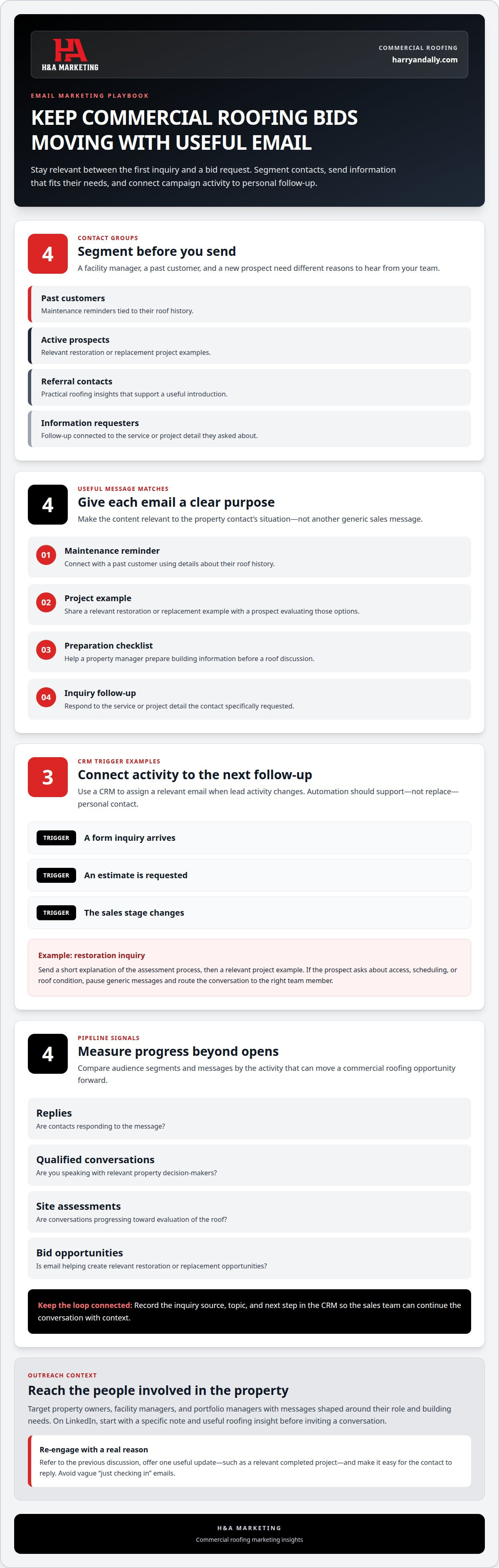
Segment your contact list by relationship and intent. Separate past customers, active prospects, referral contacts, and people who requested information but haven’t scheduled a conversation. Then shape each campaign around the next useful step:
- Send past customers maintenance reminders tied to their roof history.
- Share restoration and replacement project examples with prospects evaluating those options.
- Give property managers a concise checklist for preparing building information before a roof discussion.
- Follow up with an inquiry using the service or project detail they asked about.
A CRM can connect campaigns to lead activity. Set a trigger for a form inquiry, estimate request, or sales-stage change, then assign a relevant follow-up email. For example, someone asking about roof restoration could receive a short explanation of the assessment process, followed by a relevant project example. Keep the message useful and make the next action clear, such as scheduling a conversation or sharing building details.
Automation should support personal follow-up, not replace it. If a prospect asks about access, scheduling, or roof condition, pause generic messages and route the conversation to the right team member. Record the inquiry source, topic, and next step in the CRM. This context helps sales staff pick up the conversation without asking the property contact to repeat information.
Re-engagement works best when there’s a real reason to reconnect. A past customer might receive a seasonal maintenance reminder, while an older prospect could hear about a newly completed project relevant to their building type. Avoid vague “just checking in” emails. Refer to the previous discussion, offer one useful update, and invite a simple reply.
Measure campaign performance by pipeline progress, not opens alone. Compare replies, qualified conversations, site assessments, and bid opportunities across audience segments and messages. If a campaign draws attention but no relevant inquiries, adjust the audience, offer, or next step. This makes email a practical part of digital marketing, helping you nurture relationships through a long commercial roofing sales cycle.
3. Google Business Profile optimization
A complete Google Business Profile gives property managers a quick way to assess your roofing business. The profile can display your website link, contact information, and customer reviews. Make sure its details clearly describe your commercial roofing work, including restorations and replacements. A facility manager looking for help should be able to tell what your company does and how to inquire without sorting through unrelated information.
Start by keeping your core business details accurate. Use your business name consistently, provide current contact information, and write a concise description of your commercial services. If your team handles commercial roof restoration, say so plainly rather than relying on broad terms such as “roofing solutions.” Add a working website link and a phone number that reaches the appropriate person. Review these details whenever your services or contact process changes.
Use the profile to give prospects a useful snapshot of your work. Add current photos of commercial buildings and the roofing services you perform. Images from a completed replacement, for example, can help a property owner understand the type of project your company handles. Keep images relevant and describe them accurately. Review the profile regularly for outdated details, unanswered questions, and new customer feedback.
Customer reviews are one part of your profile, not a substitute for clear service information. Keep feedback visible and respond professionally, especially when a comment raises a concern. Don’t present a rating or review count as proof that your company suits every building. Instead, help prospects evaluate your fit with accurate service descriptions, project examples, and clear contact details.
Google Business Profile and Google Ads serve different purposes. A profile shares business information with people evaluating roofing options; paid ads let your business target keywords, demographics, and geographic locations. Set ad locations around the places your crews serve and the commercial projects you want to pursue. For example, a contractor seeking replacement bids within its service area can focus ads there rather than paying for clicks outside it. Keep the ad message consistent with the services described on the profile and its linked landing page.
- Review business details and service descriptions when company information changes.
- Use commercial project photos that represent the work your team performs.
- Compare profile activity with calls, inquiries, and qualified bid opportunities.
Local visibility also depends on relevant information across your website. Service pages that explain restoration, coating, and replacement work can help visitors find details that match their needs. A focused SEO strategy can support those pages, while the profile gives prospects a concise view of your business. Assess performance by the relevance of inquiries and project fit, not profile activity alone.
4. What are the most effective roofing marketing ideas for generating leads in 2026?
Qualified commercial roofing leads come from focused targeting, useful partnerships, and clear measurement. Match each campaign to a service, such as roof restoration, and a defined audience. Several commercial roofing marketing ideas work best when they address a specific property need and offer a clear next step. A facility owner seeking replacement bids needs different messaging from a past customer considering maintenance.
Keep roofing advertisements accurate and supportable. Describe services your company performs, represent credentials truthfully, and avoid unsupported claims about project outcomes. An ad for commercial roof restoration, for example, should explain the service without promising a particular result for every building.
Reach property managers and facility owners with targeted outreach and useful reasons to talk. Build relationships with complementary businesses, such as gutter or storm-repair providers, and create a straightforward referral process. Share a concise project example that explains the building challenge and work completed. Follow an introduction with a relevant next step, such as discussing an assessment or planned replacement. These commercial roofing marketing ideas connect your outreach to decision-makers’ needs.
To attract qualified leads, target property managers and facility owners by building type, service need, and location served. Pair that targeting with a landing page focused on commercial restoration or replacement, then ask for practical details such as property type and project concern. This helps your team prioritize inquiries that fit its work.
Pay-per-click advertising can reach prospects actively searching for roofing services. Target relevant keywords and geographic locations, then send each click to a page focused on the advertised service. An ad for commercial roof restoration, for example, should lead to restoration details and a clear inquiry option, not a generic homepage. Track campaign spend alongside qualified inquiries, proposal opportunities, and awarded work to evaluate performance.
Meta advertising on Facebook and Instagram can support seasonal campaigns and keep project examples visible to selected audiences. Plan content around practical timing, such as roof planning before a facility’s busy operating season. Use a short video or photo set from a completed replacement, then invite property decision-makers to discuss similar needs. Keep the audience, service, location, and landing page aligned.
Nextdoor advertising can help test local awareness where commercial properties and decision-makers fit your target area. Focus the message on commercial roofing rather than broad residential services. Pair it with local partnerships, and record which source produced each inquiry. Compare lead fit, requested service, and progress toward a bid, not clicks or reactions alone.
- Track PPC, Meta, and Nextdoor campaigns separately.
- Record each inquiry’s source, property type, requested work, and bid status.
- Compare campaign activity with qualified opportunities and signed projects.
A practical ROI review connects advertising activity to sales pipeline progress. If inquiries fall outside your service area or project focus, refine the targeting and message. If referrals lead to relevant property conversations, strengthen the partnership and follow-up process.
5. Social media marketing
Social media gives commercial roofing contractors a place to show how their work happens, not just what they sell. A property manager reviewing a roof replacement can see jobsite progress, crew coordination, and finished details. Social content can influence purchasing decisions for 76% of buyers, so use each post to make your expertise easier to evaluate. Share useful evidence, not a stream of generic sales messages.
Choose platforms based on your audience and the content you can sustain. LinkedIn suits professional connections with property owners and facility managers. Facebook and Instagram can showcase project photos, short clips, and company updates. TikTok tends to attract a Generation Z audience, so prioritize it only if that audience fits your business goals. One well-planned channel is more useful than several inactive profiles.
Build a practical content mix from real commercial roofing work. With permission, share a before-and-after restoration, explain the coordination needs of a replacement project, or show how crews protect an active facility. Pair each post with a short caption that identifies the roofing challenge and work completed. Don’t reveal customer details or make claims the project evidence can’t support.
- Show a project sequence, from preparation through completed roofing work.
- Explain a roof coating or restoration decision in plain language.
- Introduce a team member describing one practical jobsite consideration.
- Answer a common property-manager question with a concise post.
Give every post a clear next step. A project story might invite facility managers to discuss a similar roof condition, while an educational post could direct readers to a relevant service page. Keep the destination aligned with the post. If a LinkedIn update describes commercial roof replacement, link to replacement information rather than a broad company page. That continuity helps turn attention into a relevant inquiry.
Choose a publishing rhythm your team can maintain. For example, collect jobsite notes and approved photos during active projects, then schedule posts around completed milestones. Keep track of which topics prompt meaningful questions, profile visits, and qualified inquiries. Reactions alone don’t show whether social media supports the bid pipeline. Compare engagement with conversations from property decision-makers and the roofing services they ask about.
Consistent social media marketing also relies on clear branding and practical coordination. Use the same company name, visual identity, and service language across LinkedIn, Facebook, and Instagram. A focused set of marketing strategies helps prospects recognize your business and understand its commercial roofing expertise. Review content regularly and adjust topics based on the audience’s real questions.
Plan social media marketing for commercial roofing
H&A Marketing
H&A Marketing helps commercial roofing contractors connect reviews, search visibility, email, and social content into a more coordinated path to qualified bid opportunities. If your marketing brings inquiries but not enough suitable restoration or replacement projects, it may be time to align the message, website, and lead-generation approach. H&A can support that work with search engine optimization, website design, branding, and lead generation tailored to commercial roofing. The goal is a clear experience from the first impression through the prospect’s decision to get in touch. Explore how commercial roofing marketing can bring those pieces together.
Contact H&A Marketing to discuss a practical marketing strategy for your roofing business.
Build a steadier path to the next bid
Make every marketing touchpoint support the same business goal: reaching commercial property decision-makers and moving qualified opportunities forward. Identify the gaps that matter most to your pipeline, then align your message, follow-up, and measurement around them. The most effective commercial roofing marketing ideas are the ones your team can apply consistently and connect to real project opportunities.
H&A Marketing brings this approach together through website design, logo design and branding, and search engine optimization. These services can clarify what your company does, strengthen its online presence, and help prospects take a clear next step. To make your marketing more coordinated, start a conversation with H&A Marketing about your goals and the projects you want to pursue.
With a focused plan and consistent execution, your next opportunity can start with a stronger first impression.
Frequently Asked Questions
What are the most effective roofing marketing ideas for generating leads in 2026?
Effective lead generation connects targeted visibility with a clear qualification process. Match each campaign to a service, such as commercial roof restoration, then ask prospects about property type, roof concerns, and project timing. A property manager seeking a replacement bid needs different follow-up from someone researching options. Choose channels your team can support consistently, and assess whether inquiries fit your project goals.
How can a roofing company improve its local search rankings?
Improve local visibility by making your website and business details clear and consistent. Create useful pages for each commercial roofing service, explain the types of properties you serve, and use language customers might use to describe their needs. Keep your business name, phone number, and address consistent across online listings. Add relevant project examples to help searchers judge whether your experience fits their building.
What are the most effective marketing strategies for commercial roofing companies?
Start with a defined target customer, such as facility managers responsible for several properties or owners planning a replacement. Build a clear path from discovery to conversation: explain your services, show relevant project experience, and make it easy to request an assessment. Coordinate paid and organic visibility with sales follow-up. Review lead quality with your team so campaigns attract projects that fit your capabilities and goals.
How much should a commercial roofing company budget for marketing?
Set a marketing budget around your growth goals, target markets, available project capacity, and chosen channels. Account for both campaign activity and the resources needed to handle inquiries and follow up. A contractor entering a new market may need a different plan from one seeking more restoration bids in an established area. Track spending against qualified opportunities and awarded work, then adjust the plan as pipeline data develops.
Which marketing channels have the best ROI for commercial roofing contractors?
No single channel delivers the best return for every contractor. Paid search can capture people actively looking for roofing services, while SEO supports ongoing discovery and email nurtures existing relationships. Compare channels by qualified inquiries, proposal opportunities, and signed projects, not clicks alone. Use consistent source tracking in your CRM, and account for the time between a prospect’s first interaction and a roofing decision.
How can commercial roofers improve local SEO and Google Business Profile visibility?
Connect your business profile to a website that clearly describes your commercial services and the markets you serve. Keep contact details and service descriptions aligned, and make relevant service pages easy to find. Include project information that helps property decision-makers understand your work. Review profile details regularly and track which sources lead to calls or bid discussions. This gives your team a clearer view of visibility and lead quality.
What should a commercial roofing company website include to convert visitors into leads?
Give each important service its own clear explanation, such as restoration, roof coating, or replacement. Include project examples, a straightforward description of your process, and a prominent way to discuss a building’s needs. A useful inquiry form asks for enough context to route the request, such as property type and requested service. Keep the page focused and make the next step clear.
How can commercial roofers use case studies, reviews, and project photos to win bids?
Present each case study as a concise account of a real project: describe the property’s challenge, the work completed, and the verified result. Pair it with project photos that show relevant details, and get permission before sharing customer information or images. Use reviews as customer perspectives, not promises about future projects. Together, these materials help buyers assess your experience and prepare informed questions for a bid discussion.
