
Facility Manager Outreach for Commercial Roofers

Article by
Harry Stanley III
Harry Stanley III is a construction marketing strategist and fractional CMO at H&A Marketing. He has helped construction companies grow through website strategy, SEO, paid advertising, branding, lead generation, CRM systems, and professional content. His past work includes helping Meraki Solar generate an additional $3.7 million in revenue in his first year and supporting American Builders as a fractional CMO. Today, Harry works directly with custom home builders and construction companies to build marketing systems designed to generate qualified leads and measurable growth.
The best roofing prospect may be the person already responsible for keeping a building in working order. Facility manager outreach for commercial roofers can open conversations about roof conditions, maintenance priorities, restoration, and replacement. The U.S. Bureau of Labor Statistics describes facilities managers as professionals who help ensure that premises are safe, secure, and well maintained.
That makes facility managers valuable contacts, but a productive conversation takes more than a sales pitch. Understand their priorities, share relevant information clearly, and coordinate each step from the initial discussion through inspection and proposal.
If you already reach out to building owners and property managers, include facility managers in your commercial roofing prospecting, too. This article explains why they’re worth contacting, what to say in an email or call, and how to organize communication throughout a roofing project. The aim is a practical approach that respects the facility manager’s role and helps your team advance qualified restoration and replacement opportunities.
Key Takeaways
- Identify who manages the building, who approves roofing work, and how those responsibilities connect before you begin outreach.
- Choose outreach channels that support consistent, professional follow-up rather than relying on a single cold call or email.
- Keep your message focused on the facility manager’s priorities, with a clear introduction and a useful next step.
- Frame inspections and maintenance conversations around understanding roof conditions and planning work, not pushing an immediate sale.
- Coordinate updates, access, findings, and proposal discussions so the facility manager knows what to expect at each project stage.
What makes facility managers a good target for roofing work?
Facility managers can connect roofing contractors with the people who oversee building conditions and coordinate maintenance. First establish who owns the property, who manages daily operations, and who approves roofing work. A facility manager may identify a leak and arrange access, while an owner or asset manager controls the budget and signs the agreement. Treat these as separate roles until the contact explains the approval process.
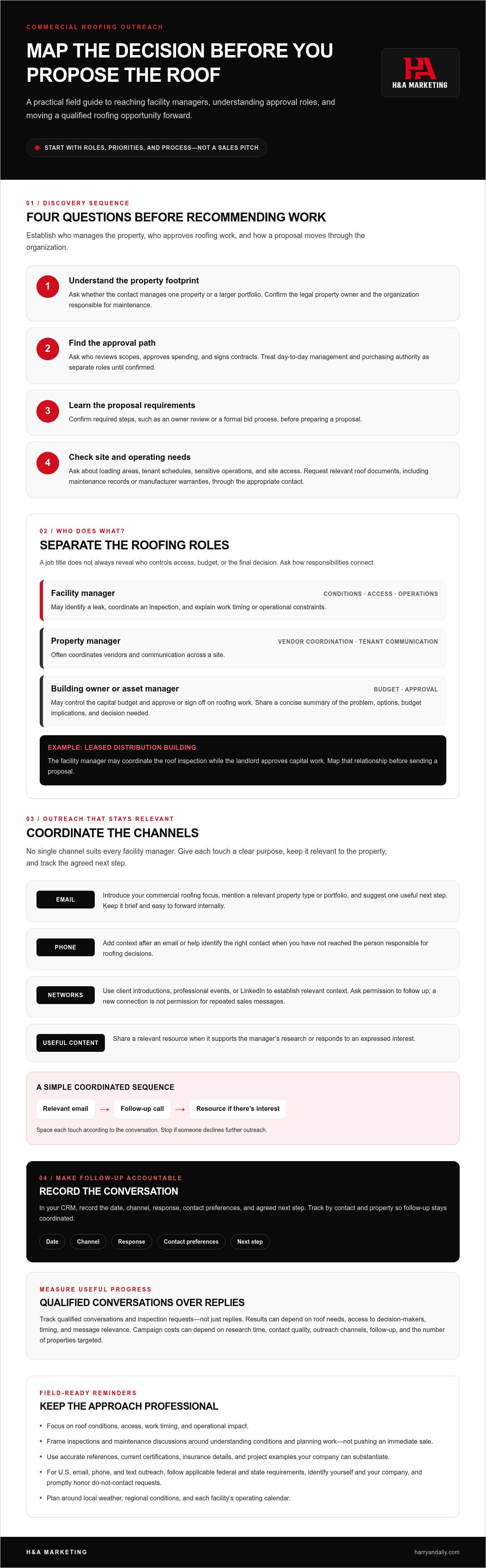
Use a short discovery sequence before recommending restoration or replacement:
- Ask whether the contact manages one property or a larger portfolio.
- Confirm the legal property owner and the organization responsible for maintenance.
- Ask who reviews scopes, approves spending, and signs contracts.
- Record required proposal steps, such as an owner review or a formal bid process.
For example, a facility manager at a leased distribution building may coordinate a roof inspection, while the landlord approves capital work. Mapping that relationship early helps prevent a proposal from going to someone without purchasing authority.
Tailor outreach to each role. Facility managers need clear information about roof conditions, access, work timing, and operational impact. Property managers often coordinate vendors and tenant communication across a site. Building owners typically need a concise summary of the problem, options, budget implications, and approval decision. Ask who handles each responsibility rather than assuming a job title defines authority.
Portfolio managers can be valuable contacts when they oversee properties across multiple buildings or states. Make reporting easy to compare: identify each property, summarize observed conditions, distinguish urgent concerns from planned work, and state the next decision. A consistent format helps managers share findings with ownership, finance, or regional operations without rewriting the explanation for each location.
Address potential disruption early. Ask about loading areas, tenant schedules, sensitive operations, and site access before proposing inspection or work dates. Explain how your crew will coordinate entry, deliveries, and updates. Manufacturer warranties and maintenance records may also affect the discussion, so request relevant roof documents through the appropriate contact.
For email, phone, and text outreach in the United States, follow applicable federal and state requirements and keep channel-specific contact records. Identify yourself and your company, avoid quoting prices in initial outreach, and promptly honor do-not-contact requests. Keep messages relevant to the property and record contact preferences to make follow-up appropriate.
Campaign costs depend on research time, contact quality, outreach channels, follow-up, and the number of properties targeted. Conversion rates also depend on roof needs, access to decision-makers, timing, and message relevance. Track qualified conversations and inspection requests, not just replies.
Build credibility with accurate references, current certifications, insurance details, and case studies that match the building type or roofing scope. Share only credentials and project examples your company can substantiate. Seasonal timing also varies by region, weather, and each facility’s operating calendar, so plan around local conditions and site priorities rather than using one national schedule.
What outreach channels work best for reaching facility managers about commercial roofing services?
No single channel suits every facility manager. Combine targeted email, phone calls, professional networking, and useful online content. Give each channel a clear purpose: introduce your company, start a conversation, or support a manager’s research. Track responses by contact and property, then adjust your approach based on which sources generate qualified conversations.
Use email and phone for direct, relevant outreach
Email gives a facility manager something they can review or forward internally. Mention a relevant property type or portfolio, explain your commercial roofing focus, and suggest one next step. Keep it brief. A phone call can add context after an email or help identify the right contact if you haven’t reached the person responsible for roofing decisions.
Plan facility manager outreach for commercial roofers as a coordinated sequence, not a one-off message. For example, send a concise email, follow up with a call, then share a relevant resource if the contact shows interest. Space each touch according to the conversation, and stop if someone declines further outreach. Record the date, channel, response, and agreed next step in your CRM to keep follow-up consistent.
Make professional networks and referrals count
Ask commercial roofing clients whether they can introduce you to facility contacts who manage similar properties. At a business event, open with a practical question about roof planning instead of launching into a pitch. If the conversation reveals a relevant need, ask permission to follow up. That gives your next email context and avoids an unexpected sales message.
LinkedIn can help establish that context. Personalize a connection request around a property portfolio, company update, or shared professional contact. Keep the note focused, and don’t treat a new connection as permission to send repeated sales messages. Use it to start a professional conversation, then switch to the contact’s preferred channel if they respond.
Let useful online content support outreach
Facility managers may review your website before replying. Make your commercial roofing services, restoration and replacement work, and inquiry path easy to find. A page about roof coatings, for example, can explain the service’s role without turning an email into a technical proposal.
Share useful content that fits the conversation, such as guidance on preparing for a roof assessment. Treat facility manager outreach for commercial roofers as one part of a connected system, with your website and follow-up reinforcing the same commercial focus. A commercial roofing marketing strategy can align outreach materials, search visibility, and the website around the projects your company wants to pursue.
Measure channel quality by the next step, not activity alone. Track replies, qualified discussions, inspection requests, and proposal opportunities by source. If calls prompt useful conversations but emails get few replies, refine the audience or message before expanding the campaign. Keep every touch relevant to the property and consistent with the contact’s stated preferences.
What should a commercial roofer include in a facility manager outreach email or call script?
A useful script explains why you’re contacting the facility manager and what response could move the conversation forward. Tie the message to one building, roofing concern, or planning question. Avoid broad claims about a roof you haven’t assessed. A specific, honest opening sounds more credible than a generic pitch covering every service your company provides.
Before drafting, decide what the message should accomplish. You might introduce your commercial roofing team, ask about a reported concern, or request a brief discussion about an upcoming project. Make sure each line supports that purpose:
- Use a subject line that names the property, building type, or relevant topic.
- Introduce yourself and your company in plain language.
- Explain the reason for reaching out without implying an inspection occurred.
- Ask one direct question that’s easy to answer.
- Offer a clear next step, such as a short discussion or sharing relevant details.
Example email structure
Subject: Roofing question about [property name]
Hello [name], I’m [your name] with [company], a commercial roofing contractor. I’m reaching out because [accurate reason connected to the property or your conversation]. Are you currently reviewing the roof at [property name], or is another project stage more relevant? If useful, I can share how our team approaches commercial roof restoration and replacement. Would a brief conversation about your priorities be helpful?
Use a reason you can explain. If you’re writing because the property is part of a relevant portfolio, say so. If a mutual contact suggested an introduction, describe the connection accurately. Avoid invented familiarity, vague claims of “urgent roof issues,” or wording that implies you know the roof’s condition without an assessment.
Keep calls brief and purposeful
A call script should sound natural, not like a proposal. Try: “Hello, this is [name] with [company]. I’m calling about commercial roofing for [property or portfolio]. I wanted to ask what roofing priorities your team is focused on right now.” Pause after the question and let the manager’s answer guide what you say next.
If they mention a concern, ask one clarifying question, such as whether it affects a particular area or operation. If they’re planning ahead, ask what information would help their internal discussion. Don’t stack questions or push for a site visit before understanding the request. Close by confirming the next action in simple terms, such as sending requested project information or arranging a follow-up conversation. This keeps the exchange useful and sets clear expectations for both sides.
How can roofers offer inspections or maintenance plans to facility managers without sounding overly sales-focused
Start with the building’s needs, not a predetermined roofing package. Ask what the facility manager wants to understand: a recurring leak, drainage concerns, roof condition, or plans for restoration or replacement. If they mention a specific issue, explain how an inspection could document relevant conditions. Don’t imply that an inspection will uncover a defect before anyone has assessed the roof.
Offer the manager a clear choice. They may want a condition assessment, a review of an existing roof concern, or a discussion about ongoing maintenance. Explain the purpose and scope before arranging access. For example, clarify whether the visit will focus on visible membrane conditions, drainage areas, penetrations, or another concern the manager identified. Confirm who will attend and how you’ll share the findings.
A useful inspection report separates observations from recommendations. Organize it by roof area or building, and describe visible conditions in plain language. Include relevant photographs, note areas needing further attention, and distinguish maintenance items from possible restoration or replacement considerations. For managers overseeing several properties, use the same report format at each site so findings are easy to compare and share.
Keep follow-up focused on decisions the facility manager can act on:
- Summarize the concern the manager raised and the areas reviewed.
- Separate immediate observations from longer-term planning considerations.
- Explain what additional information could clarify an issue, such as roof records or earlier repair notes.
- Offer practical next steps, including monitoring, maintenance, or a separate project proposal.
- Ask who should receive the report and participate in any next discussion.
A maintenance plan should explain the work and communication process, not simply promise peace of mind. State which tasks are included, how findings will be documented, how the facility manager can report new concerns, and how you’ll discuss recommendations. Tailor the scope to the roof system, property operations, and available records. Don’t suggest that routine maintenance guarantees a roof will avoid leaks or future repairs.
For example, after an assessment at a retail property, the report might identify debris near drains and document damaged flashing. The roofer can explain each observation separately, then discuss maintenance or repair options with the appropriate contact. If the manager needs time for the owner’s review, agree on a follow-up date and send the report in a format that’s easy to forward.
Stay consultative by asking permission before moving from findings to a proposal. A facility manager who requested documentation may not be ready to discuss replacement. Respect that distinction, record the agreed next step, and follow up with relevant information rather than repeated sales messages. This makes the inspection useful even when it doesn’t lead to immediate roofing work.
What commercial roofing problems and services matter most to facility managers
Facility managers need roofing work considered in the context of building operations, risk, and planning. A leak above a tenant space, blocked drainage, or damaged flashing can require prompt attention, with different implications for each area of the property. Ask where the issue appears, whether it has returned, and which operations it affects. Those details help your team shape an inspection around the manager’s actual concern.
Emergency work can also change the project conversation. Commercial roofing emergencies are estimated to cost roughly 3-5 times as much as planned work. That makes practical maintenance and early assessment relevant topics, but don’t use the estimate to pressure a manager. Explain that identifying roof conditions earlier can help them consider appropriate next steps and plan around property needs.
Facility managers may also need help weighing repair, restoration, roof coating, and replacement. Start with the roof’s observed condition, system, repair history, and the manager’s objectives. A coating or restoration may suit some existing roofs, while extensive deterioration may make replacement more relevant. Present findings and trade-offs clearly rather than pushing one service before an assessment.
Connect each service to a specific operational need:
- Leak investigation: Document the reported location, affected interior area, and visible roof conditions.
- Drainage attention: Review reported ponding or blocked drains and record the areas involved.
- Flashing and penetration work: Assess details around rooftop equipment, edges, and transitions.
- Restoration or coating: Discuss these options when the existing roof’s condition and project goals support consideration.
- Replacement: Explain the scope, sequencing, access needs, and decisions required from the property team.
- Maintenance: Organize observations and follow-up recommendations around the building’s records and operating needs.
Disruption matters at a warehouse, medical office, or occupied retail property. Ask about loading schedules, tenant access, rooftop equipment, and restricted areas before proposing work. Explain how your team will coordinate site access, deliveries, noise-sensitive periods, and progress updates. These details help managers prepare tenants and internal teams.
For a multi-building portfolio, make proposals easy to compare. Use consistent headings for each property, distinguish immediate concerns from planned work, and identify the next decision. Facility managers can then share relevant information with owners or finance teams without losing the roofing context.
For a coordinated approach to reaching commercial roofing prospects, explore commercial roofing marketing.
H&A Marketing: Website Design
H&A Marketing helps commercial roofing contractors turn facility manager interest into clear next steps with practical website design. After an outreach email, a facility manager may visit your site to assess your roofing services, project experience, and credibility. A focused website makes commercial roof restoration and replacement easier to understand and gives visitors a direct way to inquire about a project.
H&A Marketing can also align construction website design with search engine optimization, lead generation, and logo design and branding. That connection matters when your outreach directs prospects to a site that needs to explain your work and capture qualified inquiries. Consider this support when your website doesn’t reflect your commercial roofing focus or help facility managers take the next step.
Visit harryandally.com to discuss marketing for your commercial roofing business.
Build a roofing outreach process you can keep improving
Facility manager outreach for commercial roofers works best as a deliberate part of your sales process, not a burst of disconnected activity. Choose the building types and project opportunities your team wants to pursue, then establish a clear way to assess whether conversations are progressing toward work that fits your capabilities.
Review opportunity quality as well as volume. A useful conversation clarifies whether there’s a real roofing need, a potential project path, and a fit for your team. Use those patterns to refine target accounts and strengthen how your company communicates its value.
Thoughtful conversations can build familiarity before a facility manager needs restoration or replacement. Stay consistent and relevant, and give relationships room to develop.
Keep moving forward with a focused process and conversations centered on the right commercial roofing opportunities.
Frequently Asked Questions
Why is this different from buying leads?
Outreach means researching target properties and starting conversations directly; buying leads means paying for access to contact information or an inquiry. Purchased contacts can vary in interest and roofing need, so qualify them before assigning sales time. Direct prospecting lets you choose the building types, portfolios, and decision-maker roles to pursue. Neither approach guarantees a project, so compare them by qualified conversations and opportunities created.
How can commercial roofers find and identify facility managers in their service area?
Start with the commercial properties and building types your crews can serve, then research the organizations that own or operate them. Company websites, property portfolio pages, professional directories, and LinkedIn can reveal facility or property management roles. Search by organization and job title, then verify that the person handles the specific property. If responsibility is unclear, call the organization’s main business line and ask for the contact who coordinates building maintenance.
How often should commercial roofers follow up with facility managers, and what outreach cadence works best?
A coordinated sequence can begin with a concise email, followed by a call, then a relevant resource if the contact shows interest. Space each touch according to the conversation, record the agreed next step, and stop if the contact declines further outreach.
What seasonal or regional factors should commercial roofers consider when contacting facility managers?
Seasonal timing varies by region, weather, and each facility’s operating calendar. Plan outreach around local conditions and site priorities, including tenant schedules, sensitive operations, loading areas, and access.
What CRM tools and lead-generation platforms help commercial roofers manage facility manager outreach?
Use a CRM to record each contact and property, outreach date and channel, response, preferences, and agreed next step. H&A Marketing’s full-service construction marketing integrates CRM with other marketing efforts.
